Basseterre, Saint Kitts – The National Cost-of-Living Task Force remains actively engaged in monitoring global volatility and advising the Government on appropriate measures to address rising living costs.
The Task Force also gave careful attention to the continuing threat posed by global oil price volatility, particularly in light of ongoing geopolitical tensions involving Ukraine and Iran. Members noted that recent increases in oil prices can have a ripple effect across the economy, contributing to higher shipping costs, increased prices for imported goods—including food items—and rising energy expenses.

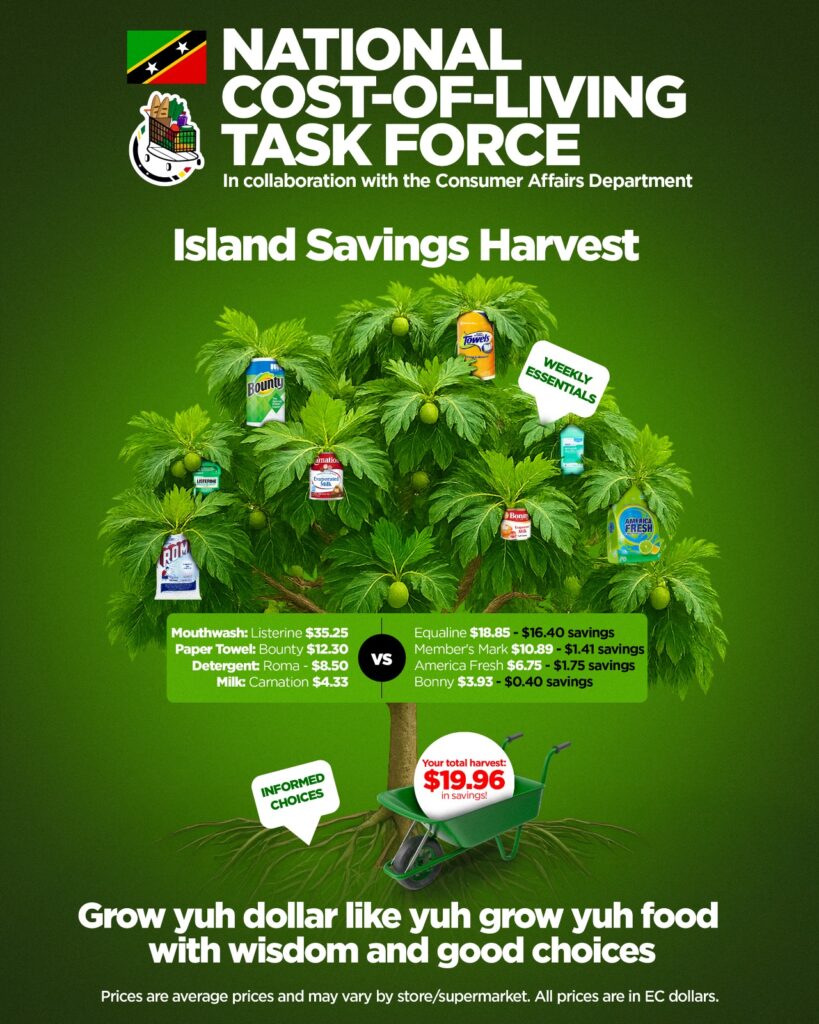
In addition to fiscal interventions, the Task Force will continue to complement Government action through its targeted consumer education campaign, ‘Smart Spend SKN’. Using data-driven visuals, price comparisons, and practical guidance, the campaign is designed to help households make informed brand and product choices that can lead to meaningful savings over time.
The Cost-of-Living Task Force was established to provide the Cabinet of the Government of Saint Kitts and Nevis with evidence-based, actionable recommendations aimed at identifying and mitigating the factors driving rising living costs, while proactively managing external shocks that may affect the affordability of goods and services for citizens and residents.