International Plant Health Day Feature | 12 May 2026
Healthy plants are the foundation of agricultural productivity, food security, and resilient farming systems. According to the Food and Agriculture Organisation, plant pests and diseases are responsible for the loss of up to 40% of global food crops each year, resulting in agricultural trade losses exceeding USD 220 billion annually.
Rising temperatures and changing climate patterns are further accelerating the spread of pests and diseases into regions where they were previously unknown.
As the world prepares to increase agricultural production by nearly 60 percent by 2050 to feed a growing population, safeguarding plant health has become more important than ever.
On the occasion of the International Day of Plant Health, ICRISAT leverages science and innovation to build resilient agricultural systems across the drylands of Asia and Africa.
ICRISAT takes an integrated approach to plant health by combining host plant resistance, biological control, predictive analytics, climate science, and farmer outreach.
Breeding for Better Plant Health
One of the most effective and sustainable ways to manage crop diseases is through developing resistant crop varieties. ICRISAT scientists continuously work to strengthen crops against major pests and diseases affecting dryland agriculture.
Over the years, the institute has developed and promoted several resilient crop varieties, including fusarium wilt, ascochyta blight, sterility mosaic diseases in chickpea and pigeonpea..
These genetic improvements reduce dependence on chemical interventions while helping farmers protect yields under increasingly challenging climatic conditions.
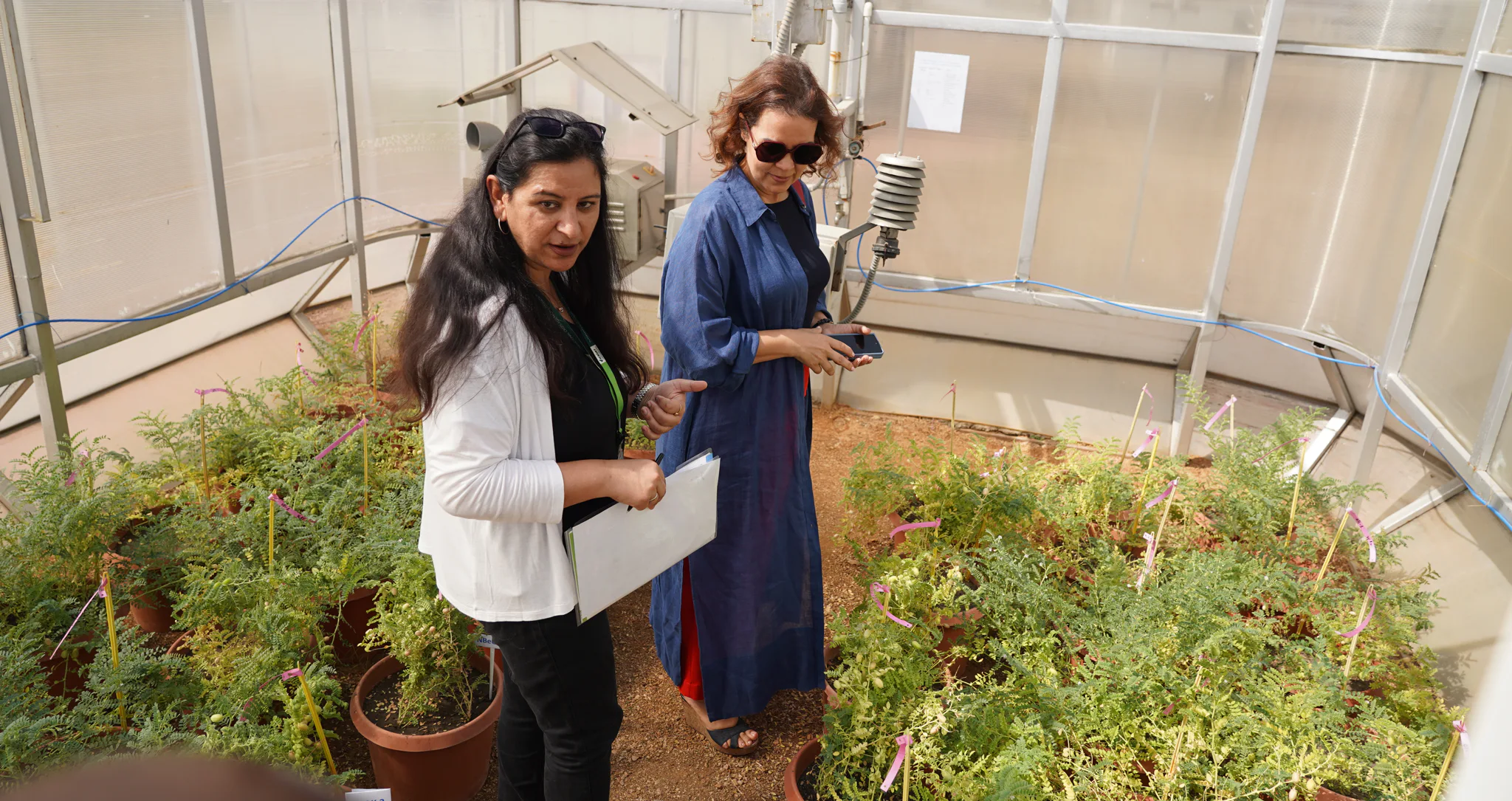
ICRISAT genebank has played an important role in conserving the genetic base for strengthening the disease resistance breeding pipeline.
Screening Chickpea Germplasm for Disease Resistance: Scientists at ICRISAT have undertaken one of the largest efforts to characterise global chickpea germplasm for resistance against major biotic stresses. More than 13,500 chickpea accessions originating from 40 countries were evaluated for resistance to Fusarium wilt, leading to the identification of 160 resistant lines. In a subsequent effort, 5,084 additional accessions from the ICRISAT Genebank and India’s National Bureau of Plant Genetic Resources (NBPGR) were screened under both sick field and controlled conditions for resistance to Fusarium wilt, Ascochyta blight, Botrytis grey mould, and dry root rot. The screening identified globally distributed resistant germplasm, including 133 lines resistant to Fusarium wilt, 33 to Ascochyta blight, 34 to Botrytis grey mould, and 74 to dry root rot, providing critical genetic resources for breeding programs worldwide. These discoveries help researchers understand the molecular signalling and defence architecture involved in chickpea resistance, paving the way for the development of next-generation climate-resilient chickpea cultivars capable of withstanding increasingly hostile disease environments.
Harnessing Nature for Sustainable Crop Protection
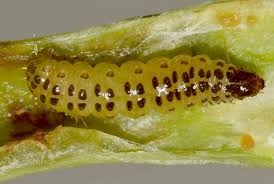
The institute’s research has contributed significantly to biological control solutions for soil-borne disease complex (wilt and root rots in legumes) and pests such as borers, miners and fall armyworm, providing socially acceptable and environmentally safer alternatives to excessive pesticide use.
Digital Tools Bringing Science Directly to Farmers
Digital agriculture and predictive analytics are becoming increasingly important in plant health management. ICRISAT is integrating weather data, AI-driven models, and field monitoring systems to provide real-time advisories to farmers.
IMPACT: SMART Crop: In partnership with SBI Foundation, ICRISAT’s SMART-CROP (Sustainable Monitoring and Real-time Tracking for Crop Resilience and Optimal Practices) initiative integrates cutting-edge technologies with sustainable farming practices to address long-standing and emerging challenges in pulses (pigeonpea and chickpea). By applying satellite imaging, Artificial Intelligence/Machine Learning (AI/ ML) tools, and weather forecasting, it enables real-time crop stress detection, allowing farmers to adopt Integrated Pests and Disease Management (IPDM) and tackle climate-induced stresses. This ongoing initiative has digitally onboarded more than 4,800 pigeonpea and chickpea farmers across Telangana and Karnataka in a year, bringing climate-smart crop advisory directly to farmers’ fields.
Building Advanced Facilities for Future Challenges
ICRISAT continues to invest in advanced research infrastructure to strengthen preparedness against emerging plant diseases in Asia and Africa. Recently, the institute inaugurated a state-of-the-art Dry Root Rot Phenotyping Facility at its headquarters in Patancheru, India.
In Nairobi, Kenya, ICRISAT also established a Fusarium Wilt Screening Facility at Kibiko to strengthen regional research and disease screening efforts in Africa.
These facilities complement ICRISAT’s broader climate change research infrastructure, which focuses on understanding how changing environmental conditions influence plant-pathogen interactions and pest emergence.
Knowledge Sharing and Capacity Building
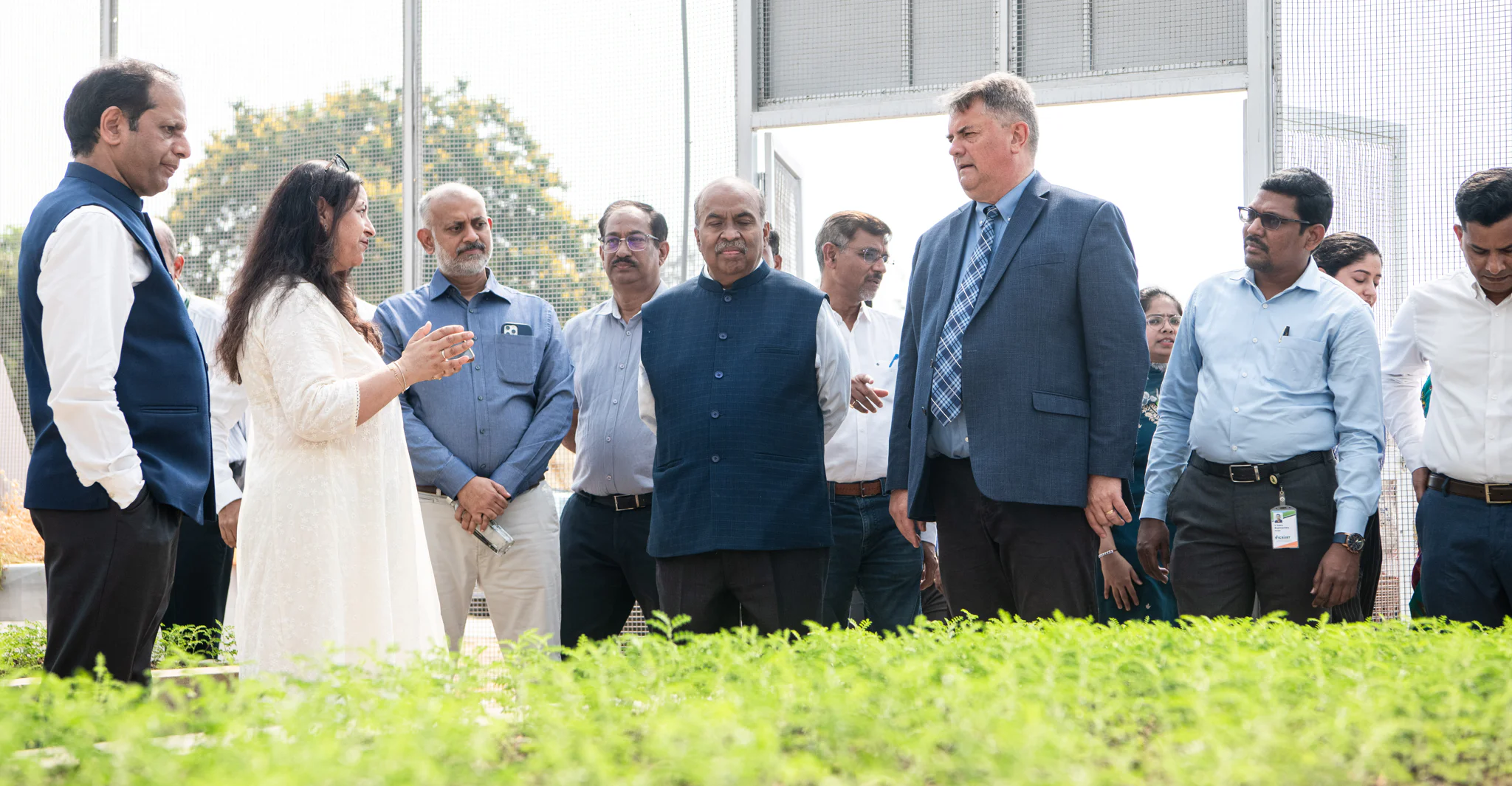
Consultation Workshop on Legume Plant and Soil Health for the Entire Legume Value Chain, Ethiopia [Dec 2025]
Hands-on training program on Empowering Women SHGs and FPOs in Dryland Regions…
In Ethiopia, ICRISAT, in partnership with the Ethiopian Institute of Agricultural Research (EIAR), organised a three-day consultation workshop on “Legume Plant and Soil Health for the Entire Legume Value Chain” in late 2025. The consultations brought together national agricultural research systems, universities, extension agencies, and private-sector stakeholders to address critical constraints affecting legume production, including soil degradation, plant diseases, seed quality, and climate-linked pest pressures.
Similarly, in India, farmers from Odisha participated in hands-on training programs focused on healthy seed production, seed treatment, seed purity, and improved sowing practices to reduce disease incidence and improve crop establishment. These practical trainings are designed to strengthen local seed systems while improving awareness of plant health management at the farm level.
Securing Plant Health for a Changing Climate
Emerging and transboundary pests and diseases demand stronger preparedness, better predictive systems, resilient crop genetics, and sustainable management practices. ICRISAT’s work demonstrates how combining advances in host plant resistance, biological control, climate-informed decision tools, and farmer-centred innovations can help build resilient agricultural systems for the future. As climate risks intensify, strengthening plant health will remain central to ICRISAT’s vision of ensuring food, nutrition, and livelihood security for millions of smallholder farmers across the drylands of Asia, Africa and beyond.