Source : Erasmus Williams FB
BASSETERRE, ST. KITTS, July 4, 2026 – Prime Minister Hon. Dr Terrance M. Drew has highlighted the contribution of Nevis-born Alexander Hamilton in his message marking the 250th anniversary of the Independence of the United States.
“This anniversary is especially meaningful for us in St. Kitts and Nevis, as our shared history includes one of America’s Founding Fathers, Alexander Hamilton, who was born on Nevis before embarking on the journey that would shape the future of the United States,” Dr Drew said.
“As we reflect on this enduring connection, I reaffirm the strong friendship between our nations and our shared commitment to peace, prosperity, security, and sustainable development.
Happy Independence Day!” he added.
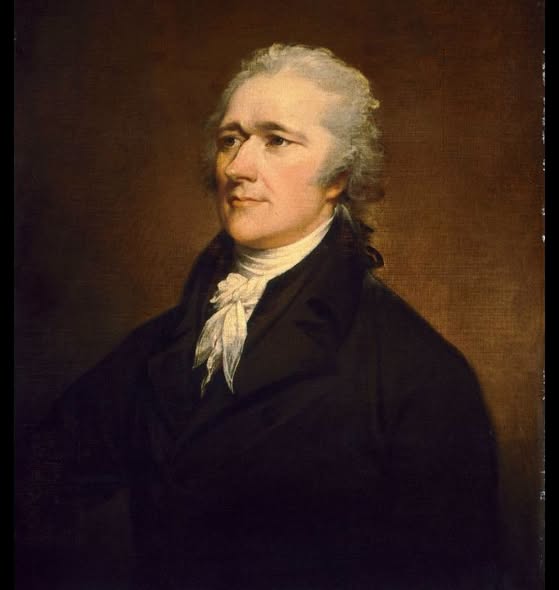
Born out of wedlock in Charlestown, Nevis, Hamilton was orphaned as a child and later taken in by a prosperous merchant. He received a scholarship to attend King’s College (now Columbia University) in New York City, where, despite his young age, he became an anonymous but prolific and widely read pamphleteer advocating for the American Revolution.
Hamilton later served as an artillery officer during the American Revolutionary War, seeing action against the British Army in the New York and New Jersey campaigns. He also served for four years as aide-de-camp to General George Washington before fighting under Washington’s command at the decisive Siege of Yorktown, which secured American victory in the war and the independence of the United States.
Following the war, Hamilton served as a delegate from New York to the Congress of the Confederation in Philadelphia before resigning to practise law and founding the Bank of New York.
In 1786, he led the Annapolis Convention, which sought to strengthen the powers of the Confederation government. The following year, he served as a delegate to the Philadelphia Convention, which drafted the U.S. Constitution and established a stronger federal government. Hamilton subsequently authored 51 of the 85 essays in The Federalist Papers, which played a pivotal role in securing ratification of the Constitution and remain among the most influential interpretations of its intent.
As a trusted member of President Washington’s first Cabinet, Hamilton became the nation’s first Secretary of the Treasury. He envisioned a strong central government, an energetic executive branch, a robust national defence, and a diversified economy driven by industry. He successfully argued that the Constitution’s implied powers authorised the creation of the First Bank of the United States, which helped assume the states’ Revolutionary War debts and was funded through import tariffs and a whiskey tax.
Hamilton also opposed American involvement with the succession of unstable French revolutionary governments. In 1790, he persuaded Congress to establish the U.S. Revenue Cutter Service to protect American shipping. Three years later, he advocated for the Jay Treaty, which restored friendly trade relations between the United States and Great Britain.
His political philosophy became the foundation of the Federalist Party, which opposed the Democratic-Republican Party led by Thomas Jefferson. Hamilton also supported the Haitian Revolution and helped draft Haiti’s Constitution in 1801.
After resigning as Secretary of the Treasury in 1795, Hamilton returned to private legal practice and business while continuing his public service. During the Quasi-War with France, President John Adams appointed him a major general, although the U.S. Army saw no combat.
In the election of 1800, Hamilton opposed President Adams’ re-election and later endorsed Thomas Jefferson over Aaron Burr, believing Burr to be unprincipled despite their political differences. When Burr sought the governorship of New York in 1804, Hamilton again opposed him, prompting Burr to challenge him to a duel.
The duel took place in Weehawken, New Jersey, on July 11, 1804. Hamilton was mortally wounded and died the following day, July 12, at the home of William Bayard Jr. in Greenwich Village, New York.
Historians widely regard Hamilton as one of the most brilliant administrators, financiers, and political thinkers among America’s Founding Fathers. His ideas profoundly influenced the development of the United States’ financial system and constitutional government. In 1997, historian Paul Johnson described Hamilton as “a genius—the only one of the Founding Fathers fully entitled to that accolade.”