
BASSETERRE, ST. KITTS — The Federation of St. Kitts and Nevis is making its voice heard on the global stage as Dr Eric Browne, focal point for St. Kitts and Nevis, warns that prolonged dry periods are increasingly affecting the livelihoods of people across the Caribbean.
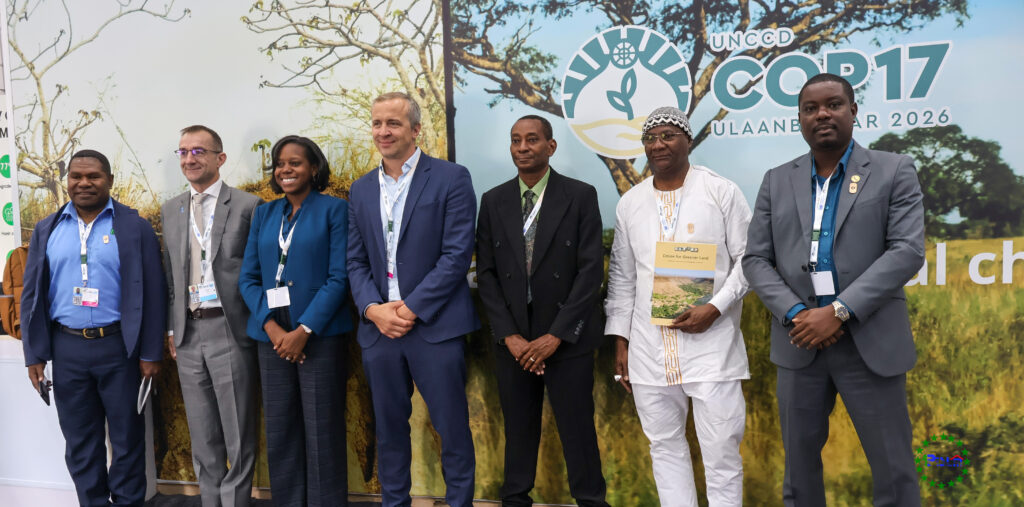
Browne made the remarks while presenting on behalf of St. Kitts and Nevis at the 17th Session of the Conference of the Parties (COP17) to the United Nations Convention to Combat Desertification (UNCCD) in Ulaanbaatar, Mongolia.
Held under the theme “Restoring Land. Restoring Hope,” the two-week conference, taking place from August 17–28, highlights the importance of global cooperation in addressing land degradation, a challenge that directly affects livelihoods and communities around the world.
A key highlight on Day 4 was a side event led by the Partnership Initiative for Sustainable Land Management (PISLM), in collaboration with Global SIDS and the Blue Green Islands (BGI). The event, titled “Building Drought Resilience in Small Island Developing States (SIDS),” focused on practical solutions that can strengthen the resilience of island communities to drought.
Browne, who presented at the event, explained that prolonged dry conditions are placing increasing pressure on schools, households, farmers, and freshwater resources. As drought conditions reduce water availability, some countries have been forced to introduce water-rationing measures that affect daily life in homes and schools.
“The effects are visible, not only in water, but across the natural environment, where once-lush green landscapes are increasingly turning brown as rainfall patterns shift,” he said.
The UNCCD focal point also highlighted the growing risk of saltwater intrusion into freshwater lenses, a serious concern for small island states that depend heavily on limited groundwater supplies and rainfall-fed systems. As rainfall decreases and demand for water increases, freshwater reserves become more vulnerable to seawater contamination, threatening both water quality and long-term supply.
For a small island nation such as St. Kitts and Nevis, these discussions are not merely theoretical; they are vital to the Federation’s long-term survival. While desertification is often associated with arid regions, it refers more broadly to the degradation of land in drylands. Small Island Developing States are increasingly vulnerable to its effects through prolonged dry spells, soil erosion, and declining agricultural productivity.
As climate change intensifies and temperatures continue to rise, with St. Kitts and Nevis experiencing one of its hottest summers, Browne posed several critical questions: Are we aware? Are we prepared? And what are we doing?
The answers, he noted, are reflected in the Federation’s seven pillars of sustainability and its active participation in international forums such as COP17.
Browne’s participation in the forum, including engagement with partners from the United Nations Development Programme (UNDP), the Global Environment Facility (GEF), and WOCAT, helps ensure that the unique vulnerabilities and priorities of St. Kitts and Nevis remain part of the global conversation on drought resilience and sustainable land management.
The knowledge gained from these discussions, particularly the shift from “drought response” to “long-term resilience,” is crucial to strengthening the Federation’s ability to respond to future challenges.
By integrating sustainable land-management practices, St. Kitts and Nevis can better protect its watersheds, support local farmers, strengthen freshwater security, and build a more resilient and sustainable future—helping to ensure that its lands remain productive for generations to come.