

OECS Press Release
The Organisation of Eastern Caribbean States (OECS) Commission, in collaboration with United Nations Trade and Development (UNCTAD) and the United Nations Economic Commission for Latin America and the Caribbean (ECLAC), has successfully concluded a high-level initiative to strengthen the economic resilience of the Eastern Caribbean through evidence-based policymaking for trade in services.
 The project, Strengthening Capacity for Evidence-Based Policymaking and Economic Resilience in CARICOM, addressed critical trade in services data gaps that have long hindered OECS Member States from fully leveraging the services sector as a driver for economic diversification.
By enhancing the availability and quality of services statistics, specifically through the implementation of UNCTAD’s Trade in Services Information System (TiSSTAT), the initiative empowers OECS Member States to design competitive export strategies and participate more effectively in global value chains.
The project also included policy support to Member States, featuring an analysis of the role of services trade in the region and advisory services tailored to national needs and contexts.
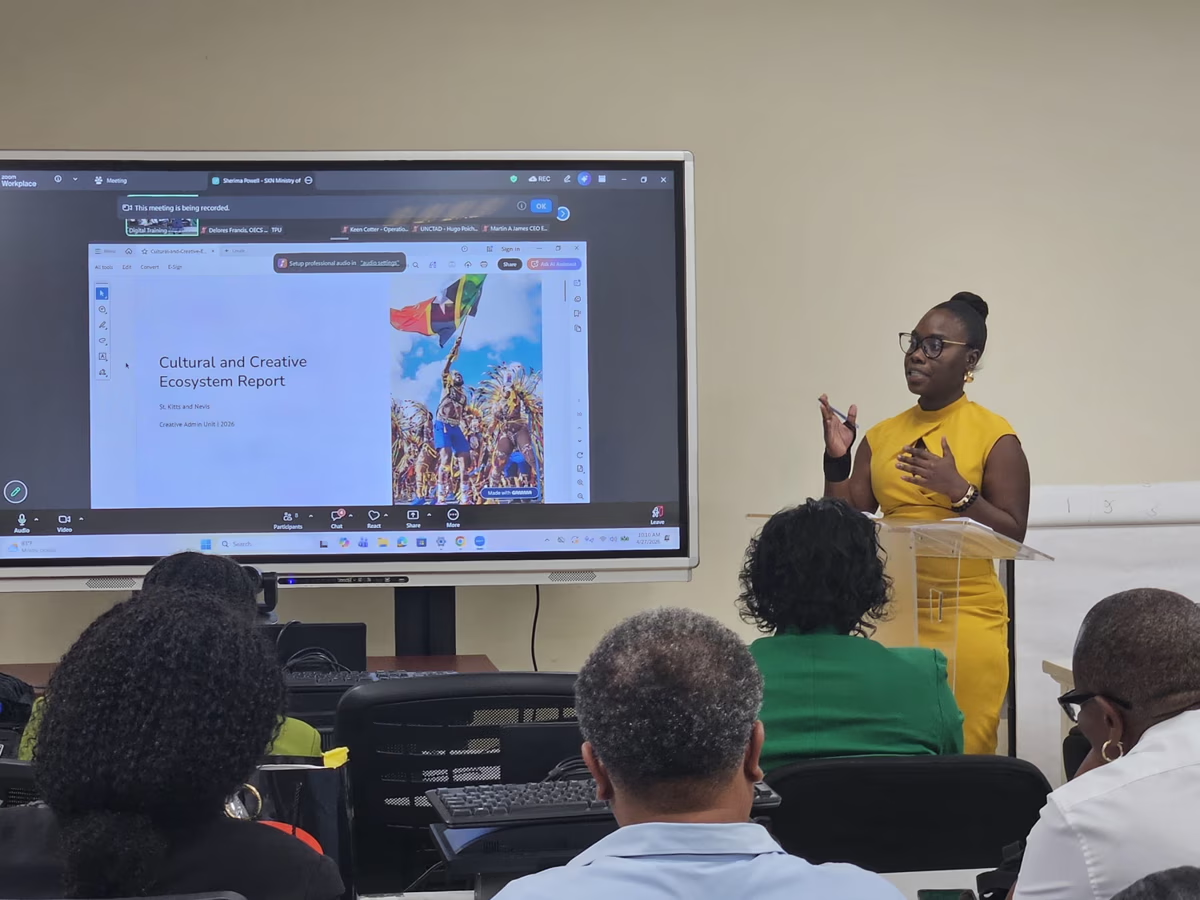
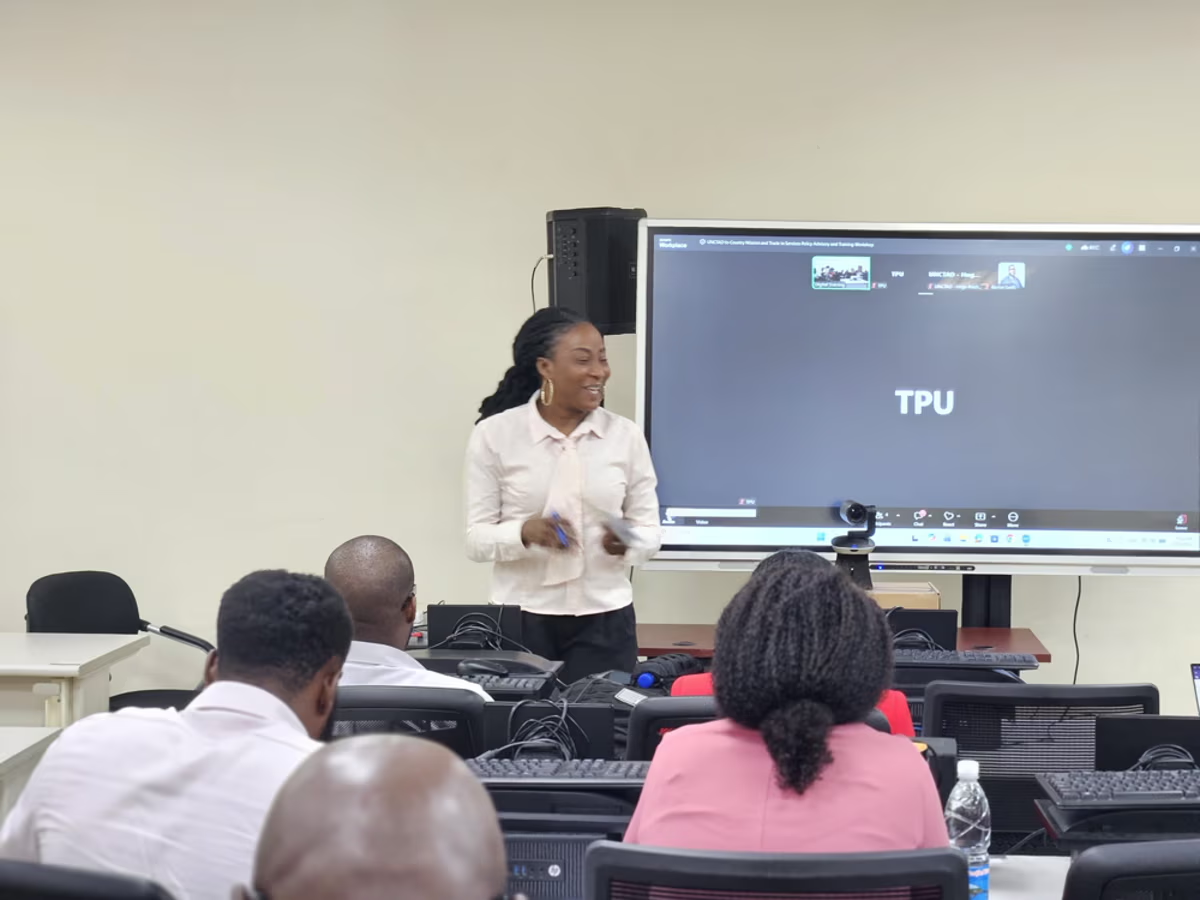
 The initiative featured a series of workshops held between March 11 and April 29, 2026, across the beneficiary OECS Member States, followed by Regional Validation Meetings in July 2026. These sessions targeted senior policymakers and technical experts from Ministries of Trade, Central Statistical Offices, and the private sector.
A primary focus was placed on the opportunities available through the growing trend of the servicification of manufacturing. The process by which the manufacturing of goods increasingly relies on producing and bundling services such as ICT and various business services to add value to sales and exports.
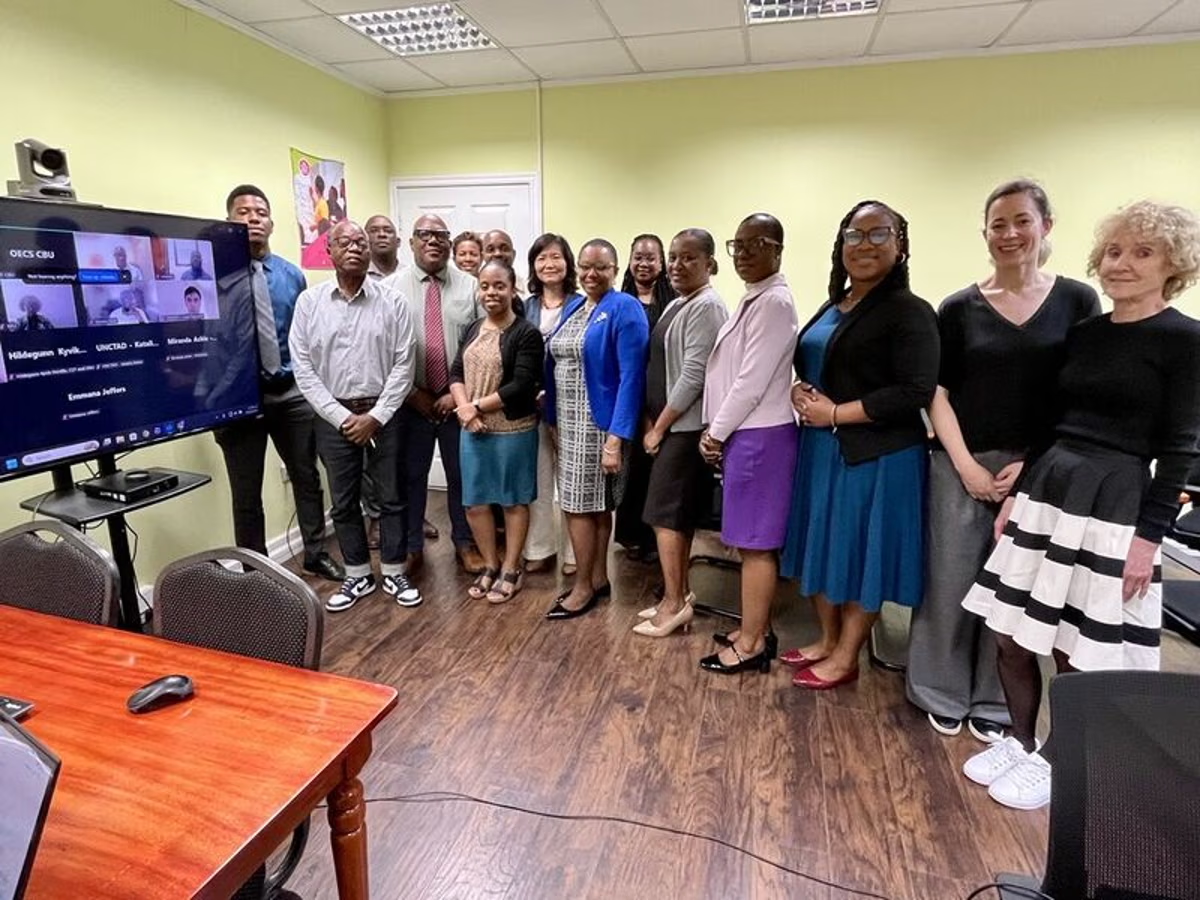 Participants also explored the Cultural and Creative Ecosystem (CCE), identifying bottlenecks in invisible value chains and developing methods to better measure and commercialise intellectual property in the digital age. The project emphasized inclusivity, with the TiSSTAT tool enabling countries to produce disaggregated data that captures the participation of women and youth in the service-led economy.
 The initiative concluded with the endorsement of four country-specific national reports titled How ICT and Business Services Can Support the Development of Creative Services and the Creative Economy in the Eastern Caribbean Economic Union. These validated findings will serve as a foundational evidence base for future trade policy reforms and sustainable economic development across the OECS.
The project benefits seven OECS Protocol Member States: Antigua and Barbuda, Dominica, Grenada, Montserrat, Saint Kitts and Nevis, Saint Lucia, and Saint Vincent and the Grenadines.