
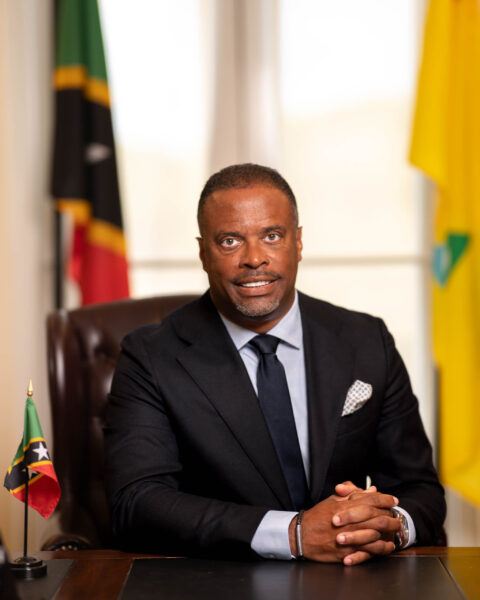
NIA CHARLESTOWN, NEVIS (September 27, 2026)- The following is an Op-Ed by the Honourable Mark Brantley, Premier of Nevis and Leader of the Opposition of St. Kitts and Nevis:
AI Will Not Wait for the Caribbean: The Time for Regional Action Is Now
A few short years ago, the Nevis Island Administration harboured ambitions of introducing coding in all Nevis schools. Today, we are told that such ideas have become obsolete, as some Artificial Intelligence tools can code better than most humans.
There are moments in history when a new technology fundamentally changes the way societies are organised, economies function, and human beings work, learn and interact.
Artificial Intelligence is such a technology. It has arrived, and it is here to stay.
The question confronting our Caribbean civilisation is therefore no longer whether AI will transform our lives. The more important question is whether we will shape that transformation- or simply allow it to happen to us.
Across the world, the conversation has become urgent. Governments, technology companies, academics and international institutions are grappling with questions that only a few years ago belonged to the realm of science fiction: What happens when machines can perform tasks better and faster than highly trained human beings? Which jobs will disappear? Which new industries will emerge? How do we protect children, elections, financial systems and critical infrastructure? How do we prevent increasingly sophisticated AI from being used for fraud, cybercrime and disinformation? And, ultimately, how do we ensure that human beings remain firmly in control?
King Charles III recently convened leaders from major AI companies to discuss the opportunities and dangers associated with this new technology. The United States and China, despite their intense rivalries, are increasingly confronting questions surrounding AI safety, cybersecurity and human control.
This is now a critical global governance issue, and the Caribbean must have a seat at the table.
CARICOM Has Already Started the Work
CARICOM deserves credit for recognising the significance of AI and beginning the difficult work of developing a coordinated regional response.
In July 2026, CARICOM’s Council for Trade and Economic Development (COTED) endorsed the UNESCO Caribbean Artificial Intelligence Policy Roadmap. That Roadmap was developed following consultations and focuses on four critical areas: culture and creativity; governance and transformation; education and upskilling; and resilience and sustainability.
CARICOM has also advanced work through the Strategic Framework for Regional Digital Resilience 2025-2030, the Secretariat’s AI Action Plan, the CARICOM-UNDP Regional Programme on AI 2026-2030, the Caribbean AI Task Force and the AI for SIDS 2.0 initiative. CARICOM has raised concerns about AI-enabled disinformation and called for stronger digital literacy, AI readiness, regional information-sharing and institutional cooperation. These are all critical initiatives and deserve commendation.
However, the extraordinary speed at which AI is developing means that we must now accelerate our own regional efforts. Adequate preparation for yesterday may be wholly inadequate for today and woefully negligent for tomorrow.
The Fierce Urgency of Now
The next phase of regional engagement on AI must therefore be about implementation.
I believe CARICOM should urgently elevate AI to the highest level of regional political engagement. We should consider a dedicated meeting of CARICOM Heads of Government specifically on AI and the future of the Caribbean economy, bringing together governments, universities, educators, trade unions, private-sector leaders, financial institutions, technology experts and representatives of the global technology industry.
The objective of such a meeting should be the creation of a Caribbean framework for living and prospering in this age of Artificial Intelligence.
That framework should establish common regional principles and protocols governing the responsible use of AI; the protection and ownership of personal data; cybersecurity; intellectual property; government procurement of AI systems; the use of AI in education and healthcare; protection against algorithmic discrimination; safeguards against deepfakes and disinformation; and clear requirements for transparency and human oversight.
For small Caribbean States, such as those in the OECS, attempting to develop entirely separate regulatory systems can prove inefficient and prohibitively expensive. Regional cooperation allows us to pool expertise, negotiate from a position of greater strength and establish standards appropriate to our circumstances.
Benefits and Burdens
Common regional regulations are critical, but regulation alone will not prepare our people for what is coming. Many are quite properly concerned about job losses caused by AI. The Caribbean must confront such issues in a direct and forthright manner.
It is undeniable that some jobs will disappear. Some jobs will change. AI is increasingly capable of performing sophisticated work in accounting, law, banking, programming, marketing, customer service, medicine and numerous other professions. For many Caribbean economies with significant employment in tourism, financial services, government administration and other service industries, this cannot be treated as somebody else’s problem. It is a shared regional problem.
Yet the AI revolution currently unfolding will also create jobs, businesses and industries that do not exist today. Our shared responsibility is to ensure that Caribbean people are positioned to seize those new opportunities.
That means teaching AI literacy in our schools. It means retraining workers. It means equipping teachers. It means modernising university and technical curricula. It means helping Caribbean entrepreneurs build businesses around AI rather than simply purchasing AI products developed elsewhere.
Our People Must Not Be Left Behind
There is therefore an urgent need for a Caribbean-wide programme of public education on Artificial Intelligence.
The teacher in Nevis, the hotel worker in Antigua, the farmer in Jamaica, the banker in Barbados, the small-business owner in Saint Lucia and the university student in Guyana should all understand how this technology may affect their lives and livelihoods. Our citizenry must be sensitised to the risks but also to the opportunities of AI. Across the Caribbean, digital literacy must be elevated to the same level as traditional literacy.
We Must Be Rule-Makers, Not Merely Rule-Takers
The European Union has moved ahead with its AI Act. The United States continues to debate the appropriate controls. China is developing its own regulatory architecture. International organisations are likewise attempting to establish global principles.
If the Caribbean does not participate meaningfully in these discussions, the rules governing this technology will be written elsewhere and handed to us afterwards. The Caribbean has seen this before in financial services, taxation and trade. We should learn from that experience and the acute risks of passivity.
A Caribbean AI Agenda
Our ambition should be greater than merely protecting ourselves from the dangers of Artificial Intelligence. We should ask how AI can help solve problems that have challenged Caribbean societies for generations.
Nagging regional challenges- including improving disaster response; improving diagnosis and access to specialist healthcare on small islands; transforming agricultural production; personalising education for Caribbean children; improving water management, renewable energy systems and public transportation; making governments more transparent and efficient; and helping Caribbean entrepreneurs scale their businesses and expand their markets-can all potentially be addressed with AI technology.
Our worst response would be fear. Our second-worst response would be complacency. We in the Caribbean must succumb to neither.
Conclusion
Artificial Intelligence will not wait for the Caribbean to get comfortable. The AI revolution is here. It is now.
The work already undertaken by CARICOM, UNESCO, the Caribbean Telecommunications Union, UNDP and other regional partners provides us with an important starting point.
But we must now accelerate that work with extreme urgency and steadfast purpose.
So let us convene our regional leadership. Let us engage the world’s leading AI companies and researchers. Let us establish common Caribbean standards. Let us prepare our schools. Let us retrain our workers. Let us educate our citizens. Let us protect our institutions. But even as we do these things, let us also invest in our own innovators so that Caribbean people are not merely consumers in this revolution but creators, entrepreneurs and owners.
Our responsibility at this critical point in the journey of our shared Caribbean civilisation is not to stop the future but to ensure that the Caribbean and its people are ready for the future that AI is bringing- and will continue to bring.
Honourable Mark Brantley
Premier of Nevis
Leader of the Opposition, St. Kitts and Nevis