
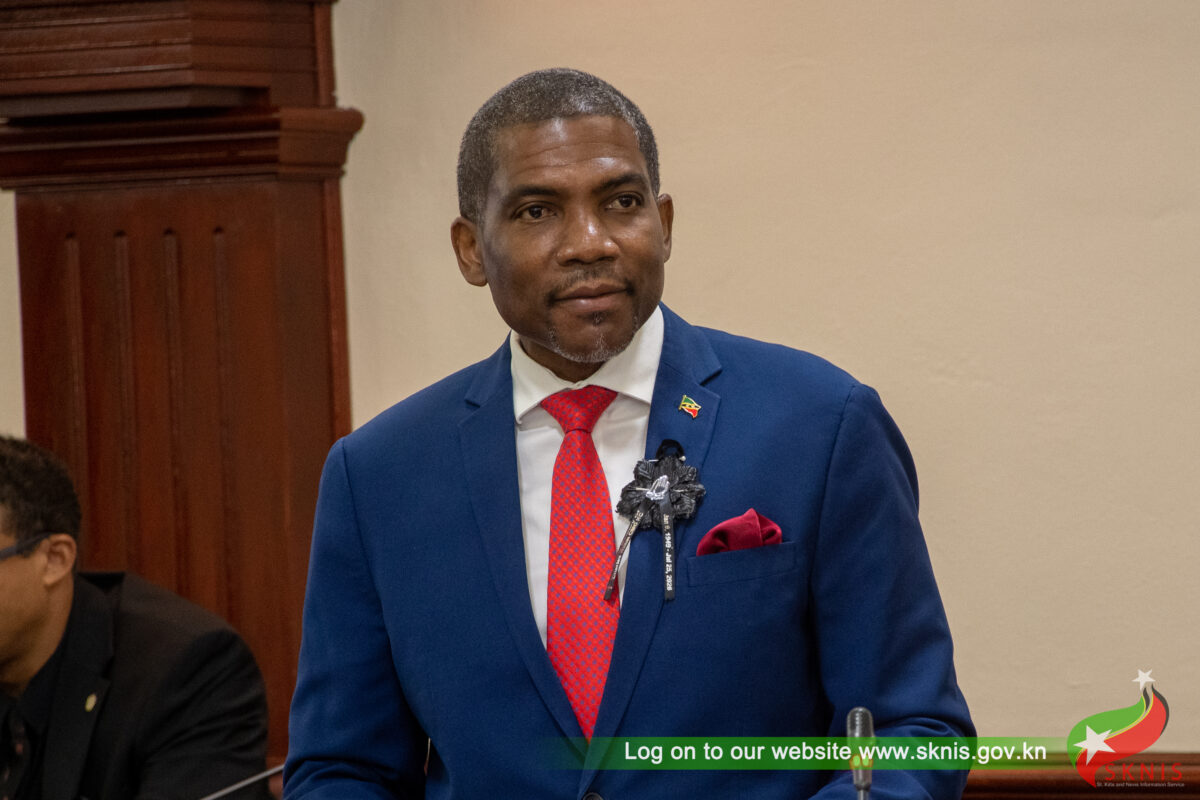
Basseterre, St. Kitts (PMO) – As the Government of St. Kitts and Nevis approaches the fourth anniversary of its election to office on August 5, Prime Minister the Hon. Dr Terrance Drew has outlined major advances made by his administration in water security, electricity generation, healthcare, education and other essential areas of national development.
During a comprehensive presentation in the National Assembly on Thursday, July 30, Prime Minister Drew reviewed several of the challenges inherited by the Government in August 2022 and detailed the interventions undertaken to improve critical infrastructure and public services.
The Prime Minister said the administration entered office facing significant deficiencies in the delivery of water, electricity, emergency healthcare, educational infrastructure and other services necessary for the proper functioning of the country.
According to Dr Drew, the Government was compelled to reprioritise national resources and invest hundreds of millions of dollars in areas that directly affect the health, safety, dignity and quality of life of citizens. “The record speaks for itself,” the Prime Minister said as he presented an account of the work undertaken in less than four years.
Water security was identified as one of the most urgent challenges confronting the administration. Prime Minister Drew said the Government received information indicating that only approximately 24 per cent of the population had reliable access to potable water on a 24-hour basis when the administration entered office. He noted that the situation required immediate and substantial intervention, given the importance of water to public health, sanitation, education, agriculture, economic activity and national development.
“What did we do? We started to invest. We had to re-prioritise,” Prime Minister Drew stated.
The Government subsequently embarked on an extensive program involving the drilling of wells, installation of pipelines, expansion of storage capacity, development of new water sources and construction of a major desalination facility.
Prime Minister Drew shared that between EC$70 million and EC$100 million has been invested in strengthening the water system. Adding that the desalination plant alone represents an investment of approximately EC$60 million.
As a result of those interventions, the Prime Minister reported that approximately 70 per cent of St. Kitts now has access to 24-hour water service, compared with the approximately 24 percent reported when the Government entered office.
Significant progress has also been recorded in Cayon, where the Government commissioned drilling operations that resulted in the discovery of a high-quality underground water source.
Prime Minister Drew said repeated testing confirmed the exceptional quality of the water. “We did not only find water, but we found pure water,” he stated.
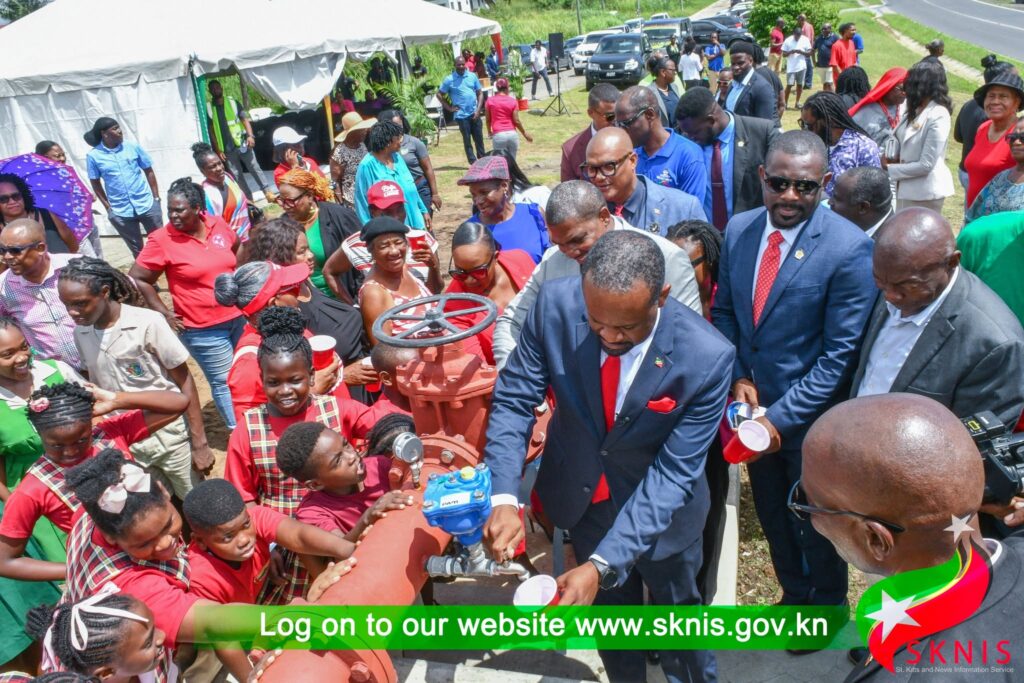
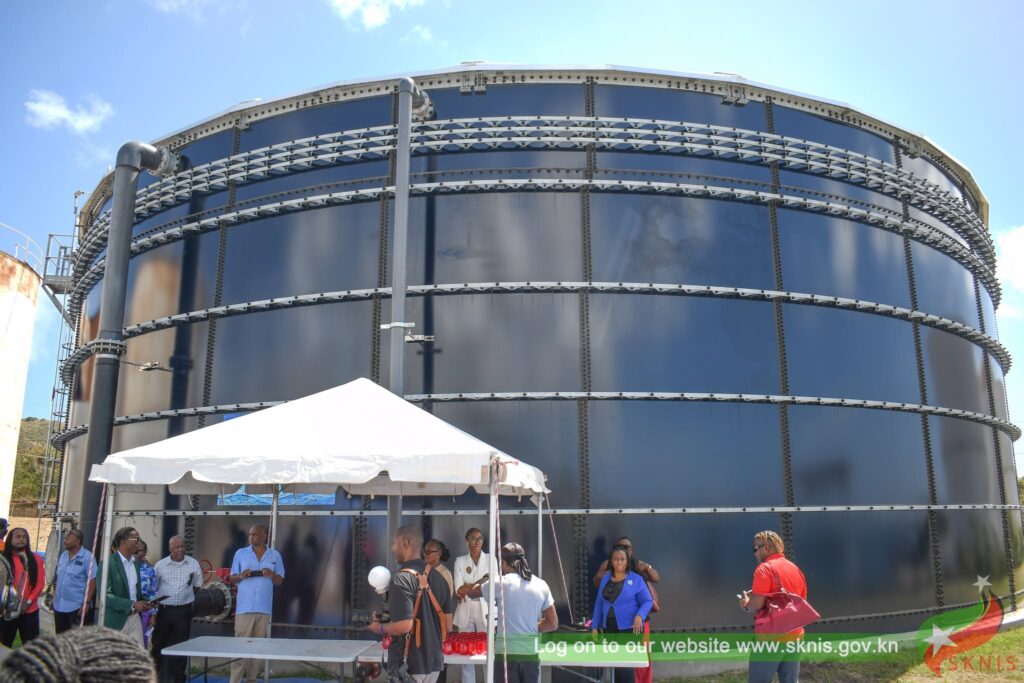
The Prime Minister said Cayon now has more than 90 per cent 24-hour water coverage. A new 500,000-gallon storage tank has also been completed, and work is continuing to connect the well to the tank and expand distribution to the remaining elevated sections of the community. The increased production and storage capacity in Cayon will also allow other water resources to be redirected to St. Peter’s, further strengthening the reliability of the supply in that community.
The Government is continuing drilling operations in other parts of Saint Kitts as it works towards its objective of universal 24-hour water coverage.
Prime Minister Drew emphasised that these gains have been achieved during severe drought conditions and amid the growing effects of climate change.
“All civilisations need land, they need water, but most of all, they need water because without water, nothing else happens,” he said.
The Government has also taken major steps to address deficiencies in electricity generation and strengthen the reliability of the national grid.
Prime Minister Drew announced that concessionary financing was negotiated through Saudi Arabia to fund the acquisition of two new dual-fuel generating units. “I went to Saudi Arabia, Madam Speaker, and I had the opportunity to meet high officials in Saudi Arabia and negotiated a concessionary loan to fund two brand new Gensets that are dual fuel, meaning they can use LPG, and they can use LNG,” the Prime Minister said.
Each generating unit will have a capacity of nine megawatts, providing a combined 18 megawatts of additional generating capacity. The Prime Minister indicated that the peak electricity demand in Saint Kitts is approximately 30 megawatts.
The new generators are expected to significantly improve the country’s generation capacity and support the transition towards a more reliable, resilient and diversified energy system.
These investments, as noted by Prime Minister Drew, are necessary because critical electricity infrastructure had not received sufficient investment before the current administration entered office. He explained that the Government has had to rent temporary generating capacity while advancing the procurement and installation of permanent equipment.
Healthcare has similarly received focused attention during the administration’s first four years.
The Prime Minister recalled that the Government inherited serious challenges at the Joseph N. France General Hospital, including sections of the facility that were affected by leaks during periods of rainfall.
He said the condition of the hospital demonstrated the need for public resources to be directed towards essential infrastructure rather than merely being retained to produce favourable fiscal figures. “What is the purpose of surplus if people can’t get a glass of water? What is the purpose of a surplus if the hospital is leaking?” Prime Minister Drew asked.
Emergency medical transportation was another area requiring urgent intervention. Prime Minister Drew recalled instances in which ambulances were unreliable and unable to complete emergency assignments.
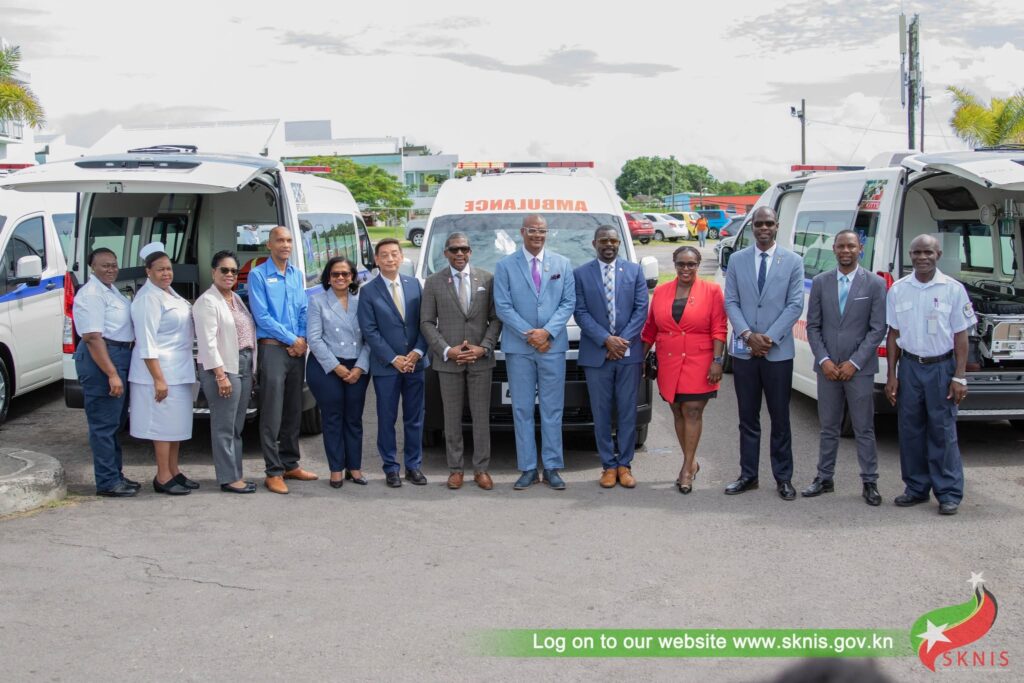
He said the Government responded by moving beyond the acquisition of a single replacement vehicle and investing in an expanded ambulance fleet. The investment has strengthened the capacity of the national emergency medical services and reduced the likelihood of patients and families being left without dependable transportation during medical emergencies.
In education, Prime Minister Drew highlighted the construction of the new Basseterre High School as one of the Government’s most significant infrastructure projects.
The Prime Minister noted that students and teachers had waited for years for the promised institution, while millions of dollars had previously been expended without the physical construction of a new school.
Under the present administration, construction is now actively progressing. “It is being built,” Prime Minister Drew said, describing the project as “a modern high school, and we are doing that less than four years in office.”
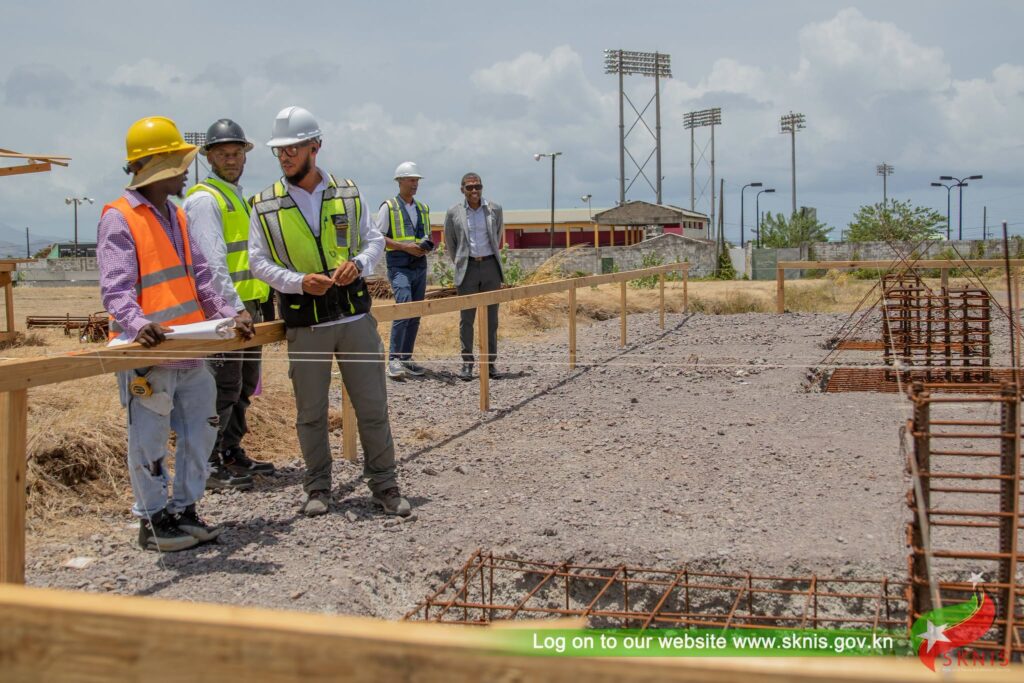
The new Basseterre High School is intended to provide students and educators with a modern, safe and properly equipped environment for teaching and learning.
Prime Minister Drew said the project reflects the administration’s determination to move from promises to implementation and to make the investments required to prepare young people for the future.
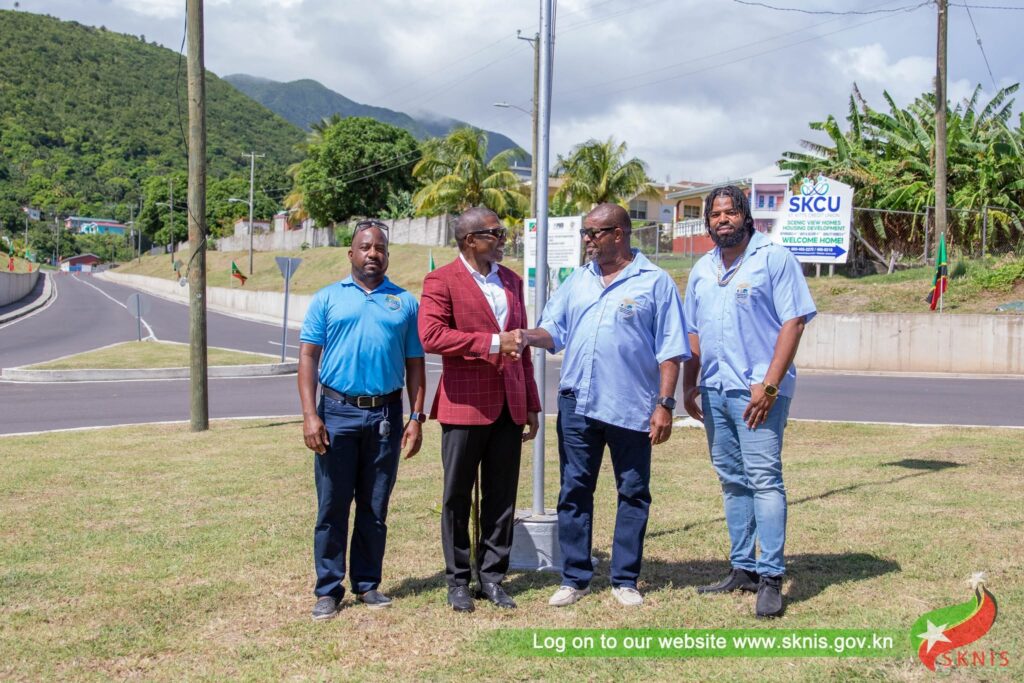
The Government’s broader infrastructure program has also included construction of the St. Peter’s Main Road, improvements to sporting facilities in Conaree and rehabilitation work at the Kim Collins Athletic Stadium.
The Prime Minister said the St. Peter’s Main Road, valued at more than EC$30 million, is critically important to the continued growth and development of one of the largest communities outside Basseterre. He emphasised that the Government is committed to serving all communities, regardless of their traditional political support.
The administration’s record over the past four years, according to Prime Minister Drew, reflects a deliberate decision to place people and essential services at the centre of national development. He acknowledged that the Government would have preferred to direct some of the resources towards other programs, but said investments in water, electricity, healthcare and education could not be delayed.
As the Government prepares to observe its fourth anniversary on August 5, Prime Minister Drew reaffirmed that the work will continue.
The administration, he said, remains focused on achieving 100 per cent 24-hour water coverage, strengthening the national electricity system, modernising healthcare, completing key educational projects and ensuring that public investment produces measurable improvements in the lives of the people.