
Basseterre, St. Kitts – Residents are being urged to take urgent precautions as a dense Saharan Dust Plume and unusually high temperatures combine to create dangerous health conditions across the Federation.
The dust plume—part of the Saharan Air Layer currently moving toward the U.S. Gulf Coast—has blanketed the islands in a thick haze, bringing not just reduced visibility but also significant health risks. Its dust-laden air is known to aggravate respiratory conditions such as asthma and chronic obstructive pulmonary disease (COPD).
Health officials warn that individuals with pre-existing respiratory illnesses should remain indoors as much as possible and wear protective masks if they must venture outside.
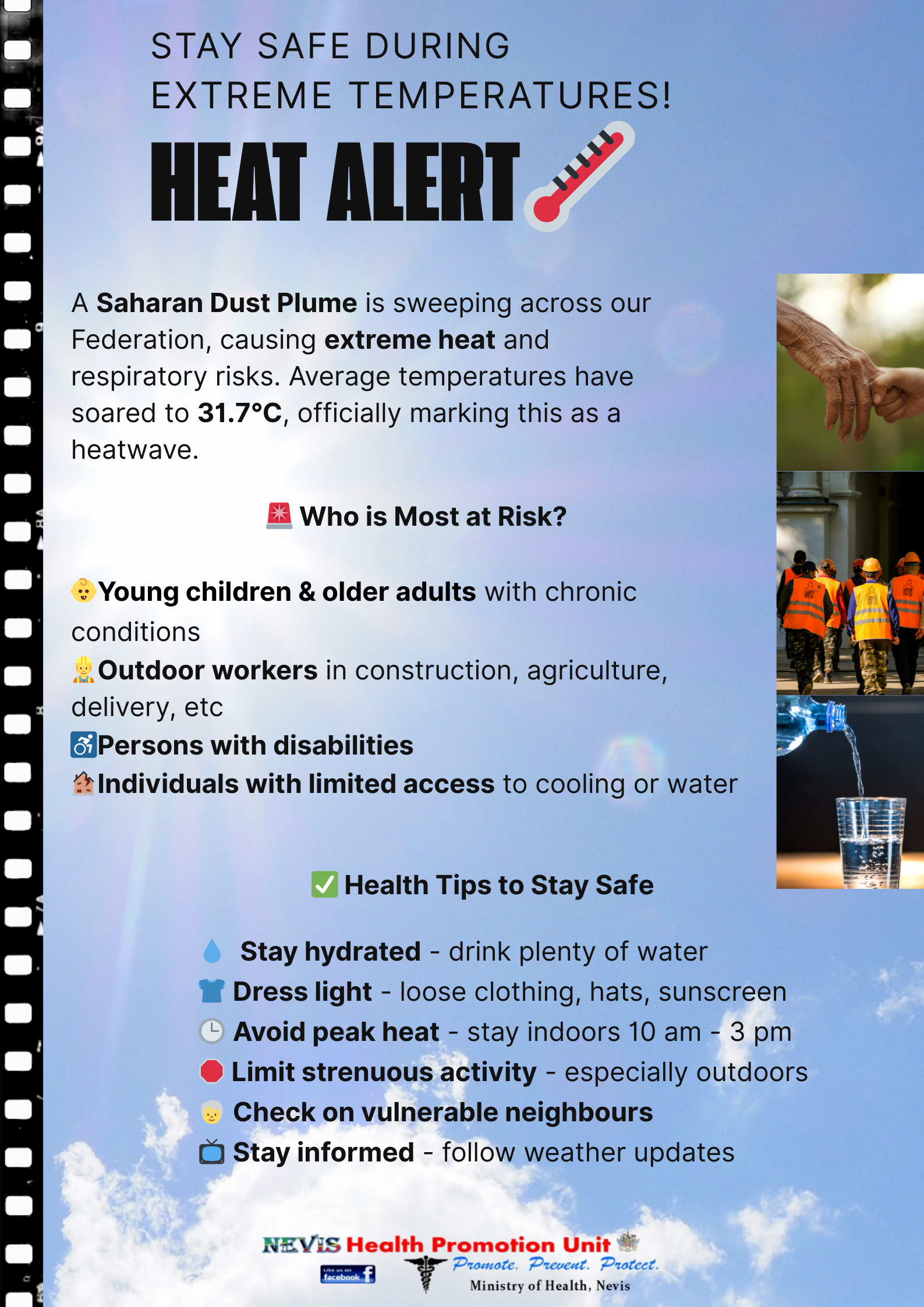
To make matters worse, the dust plume has arrived during a period of extreme heat. According to the St. Kitts Meteorological Services, temperatures over the past week have ranged from 31.4°C to 32.0°C, with an average maximum of 31.7°C—meeting the official threshold for a heatwave. High humidity, fueled by peak sea temperatures, has further elevated the heat index, making conditions feel hotter than the recorded temperature.
Dr. Hazel Laws, Chief Medical Officer, noted that prolonged exposure to such conditions could worsen chronic illnesses, including lung, heart, and kidney disease, and in some cases lead to medical emergencies such as heart attacks and strokes.
Who is Most at Risk
The Ministry of Health highlighted several vulnerable groups facing heightened risks:
Young children and older adults – particularly those with chronic illnesses such as diabetes, hypertension, or heart disease. These groups are more prone to dehydration and heat-related complications.
Outdoor workers – including those in construction, agriculture, and delivery services, who face prolonged sun exposure and heavy physical strain.
Persons with disabilities – who may have mobility challenges or limited access to cooler environments and protective measures.
Individuals with limited resources – including those without reliable access to air conditioning, safe shelter, or clean drinking water.
Ministry of Health Safety Guidelines
To reduce health risks, the Ministry of Health advises the following precautions:
Stay hydrated: Drink safe water regularly throughout the day.
Dress smart: Wear light, loose-fitting clothing. Use a wide-brimmed hat, umbrella, or sunscreen outdoors.
Protect the vulnerable: Keep young children and older adults indoors, especially between 10:00 a.m. and 3:00 p.m., when heat is most intense.
Support outdoor workers: Limit strenuous activity during peak hours, and ensure frequent breaks in shaded or cool areas.
Check on others: Monitor older adults, persons with disabilities, and neighbours who may need assistance. Ensure they have cool, ventilated living spaces and access to water.
Stay informed: Follow daily weather forecasts and plan activities during cooler times, such as early morning or late evening.
“As a nation, we must act collectively to safeguard the health and well-being of all, especially our most vulnerable citizens,” Dr. Laws emphasized. “The challenges of extreme heat and climate change demand both vigilance and community care.”