
Source :Erasmus Williams FB
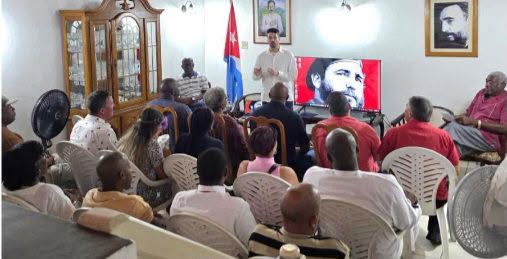
BASSETERRE, ST. KITTS, August 17, 2026 – The Embassy of Cuba in St. Kitts and Nevis hosted an emotional commemorative event last Saturday evening to mark the centenary of the birth of Commander-in-Chief Fidel Castro Ruz, historic leader of the Cuban Revolution.
The gathering brought together members of the diplomatic corps, representatives of the St. Kitts and Nevis–Cuba Friendship Association, the Association of Cubans Residing in St. Kitts and Nevis, the Cuba Alumni Association, and the St. Kitts-Nevis Trades and Labour Union.
Ambassador Giuvel Orozco Ortega highlighted the life of Fidel Castro as a revolutionary leader whose impact transcended geographical and linguistic borders and whose legacy remains a vital reference point for the Cuban Revolution as it confronts today’s challenges.
Fidel was not only an outstanding patriot and revolutionary, born at a pivotal moment to play a transformative role in the history of Cuba; even after his passing, he continues to be regarded as an essential reference in contemporary history.
The commemorative evening provided a space for tribute and for reaffirming the bonds of brotherhood between the two peoples. Through their testimonies, participants highlighted the continued relevance of Fidel Castro’s political, social, and humanist thought.
Particular emphasis was placed on his internationalist vision, solidarity with developing countries, and unwavering commitment to South-South cooperation. These principles inspired Cuba’s extraordinary contributions to other peoples through the deployment of Cuban medical brigades and the education and training, in Cuba, of thousands of professionals from Latin America, the Caribbean, Africa, Asia, and the United States in fields such as healthcare, education, engineering, and other social science disciplines. Nearly 200 of these professionals are from St. Kitts and Nevis.
During the exchange, participants also reflected on the challenges facing Cuba as a result of the tightening of the U.S. blockade and the energy siege imposed by the Government of the United States. These circumstances prompted expressions of solidarity and sympathy toward Cuba.
The Ambassador explained that, despite the difficult situation and what he described as an attempt to carry out genocide against the Cuban people, there remains an epic spirit of resistance, numerous expressions of solidarity around the world, and a determination among Cubans to advance through their own efforts. For this reason, he said, far-reaching economic and social transformations have been undertaken.