

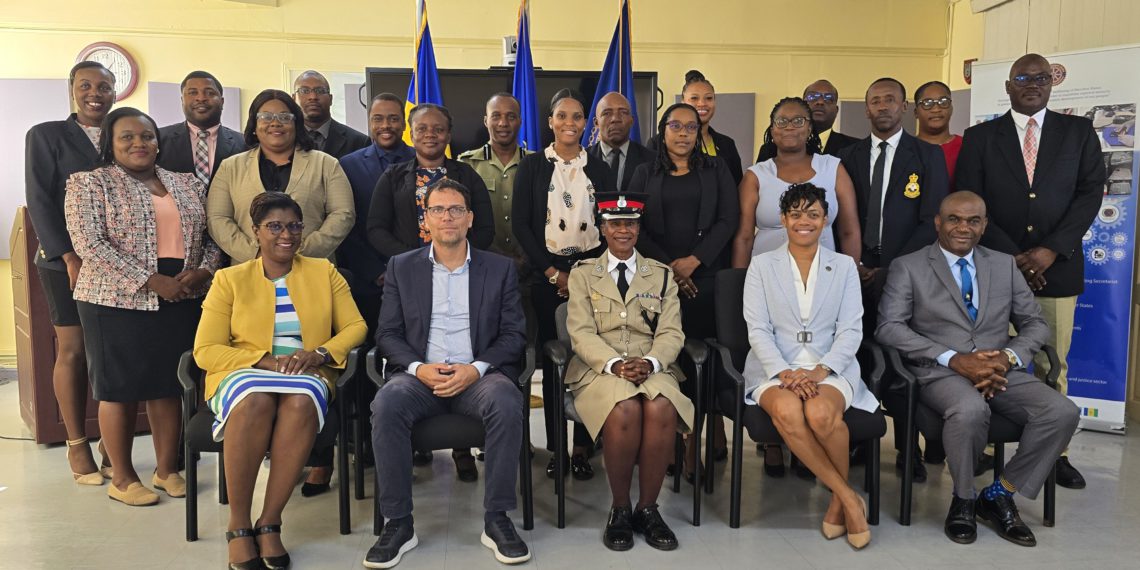
Improving public trust and perception of the police is essential for the success of public safety initiatives. This sentiment was expressed by Superintendent of the Barbados Police Service, Christine Standford, who emphasised that trust can only be fostered if community members feel they are treated fairly and provided with excellent customer service.
She made these remarks while addressing sixteen officers from Regional Security System (RSS) member states who had recently completed a two-week Community Policing course, hosted by the RSS Training Institute with support from the 11th European Development Fund Project. Superintendent Standford pointed out that law enforcement officials face challenges in building relationships with the public due to a history of negative interactions with the police and “depressed intergenerational socio-economic circumstances.”
“You would expect public trust and support for the police to be at an all-time high when the crime rate is low. However, despite low crime rates and having the best-trained officers we have ever had, public perception of the police has not improved. Research shows that people are more concerned about how they are treated by the police than the crime rate,” she stated.
“If individuals have not personally experienced mistreatment by the police, they often hear stories from friends who have. These negative experiences linger for a long time. Rebuilding trust in a community where it has been broken can most effectively be accomplished one interaction at a time,” she added.
The Superintendent highlighted that officers should actively listen to community members as they share their experiences, explain their actions, clarify the reasons for their decisions, and allow everyone to maintain their dignity.
“I assure you that if every community officer practices these four steps during their interactions, it will significantly improve cooperation within the community and enhance overall support for the police,” she maintained. She noted that police officers at all levels must prioritise community engagement as part of community policing efforts.
To engage effectively with communities, law enforcement officials should embrace inclusion, communication, empowerment, and feedback in their interactions. Superintendent Standford affirmed that “investing time and resources in community engagement will ultimately yield positive results in the future.”
Alessandro Tedesco, Team Leader for Security, Justice and Human Rights at the European Union, expressed pride in supporting such initiatives and commended the Community Police Officers for their vital work. “There are many observations that can be made in neighbourhoods that might otherwise go unnoticed—like signs on streets, lyrics of songs, and other subtle cues. For a Community Policing Officer, these can provide useful information on relevant matters,” Mr. Tedesco pointed out.
Meanwhile, Rhea Reid-Bowen, Director of Strategic Services and International Affairs at the RSS, acknowledged the challenges police face as they strive to adopt a more citizen-oriented approach. The course was part of the RSS’s efforts to support the professionalisation of police forces across member states while promoting a more inclusive and participatory approach to crime-solving.
Mrs. Reid-Bowen stated, “This sustained effort toward building trust with the public is crucial for community policing philosophies to thrive. It will foster a willingness among citizens to cooperate with law enforcement in addressing crime and a desire for citizen-centred approaches to crime control and security.”