
OECS Media Release
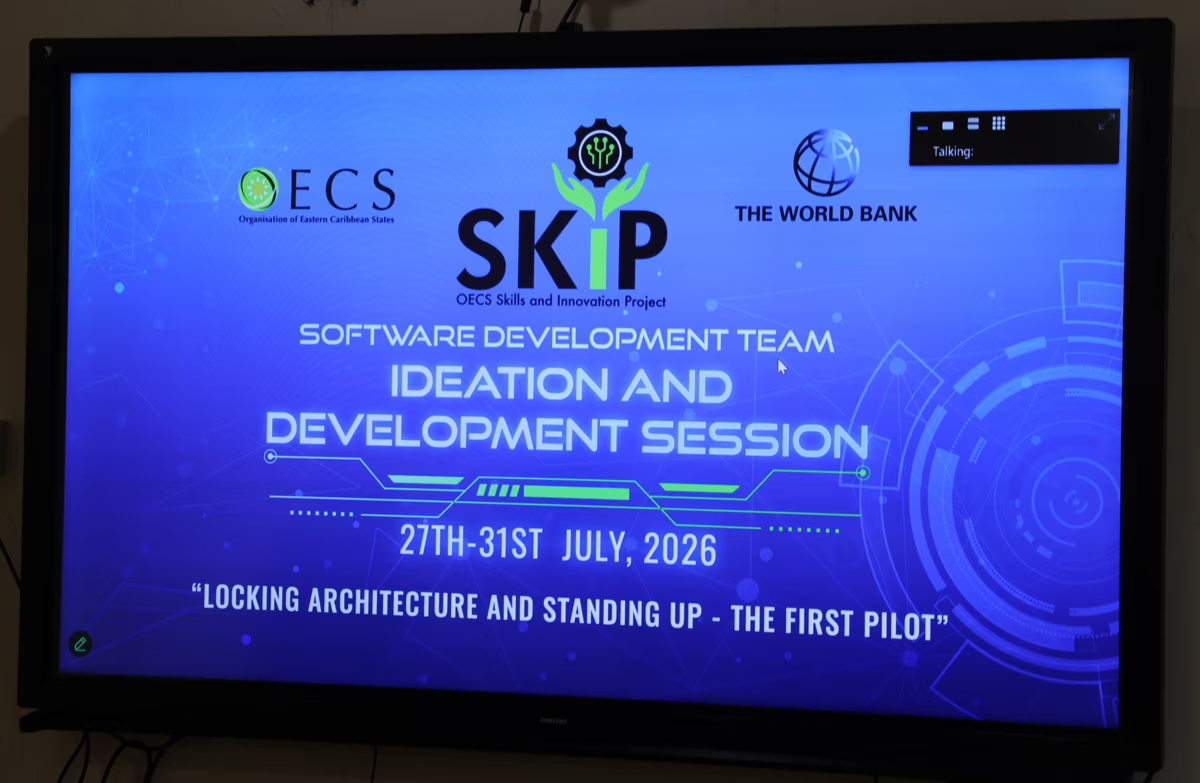
The World Bank-funded OECS Skills and Innovation Project (SKIP) has reached a significant milestone in advancing the digital transformation of post-secondary education across the Eastern Caribbean, following the successful conclusion of an intensive OECS Software Development Team (SDT) Ideation and Development Session held in Grenada from July 27-30, 2026.
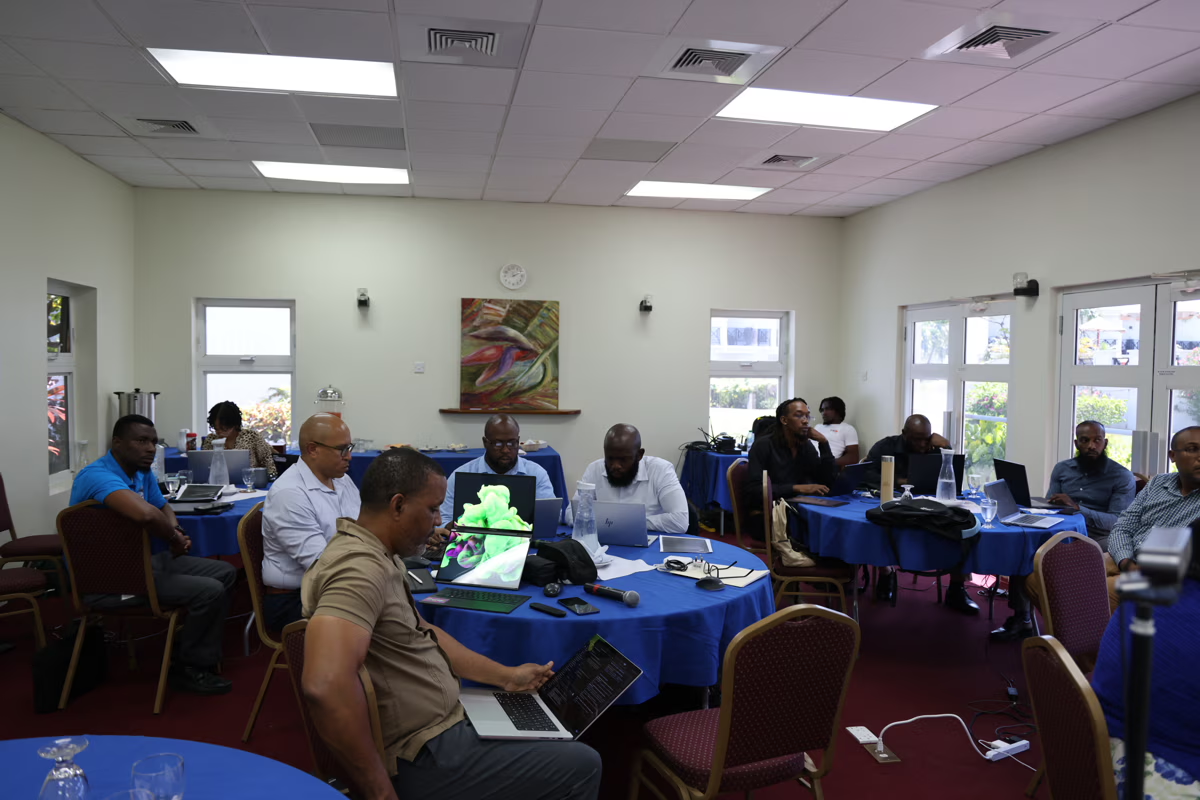 Convened by the Organisation of Eastern Caribbean States (OECS) Commission under Component 1 of the OECS Skills and Innovation Project, which is being implemented by the Regional Project Implementation Unit (RPIU) in the Education Management Development Unit (EDMU) at the OECS Commission, the four-day technical engagement brought together software developers and technical specialists from across OECS Member States to accelerate the development of three cornerstone digital platforms that will form the foundation of a regionally interoperable post-secondary education ecosystem. This ecosystem comprises the OECS SKIP Knowledge, Technology and Innovation Platform (KTIP), the Virtual Campus and the Education Management Information System (EMIS).
 The milestone represents another important step in the OECS Commission’s commitment to harnessing innovation, regional collaboration and digital technologies to strengthen education systems, improve institutional decision-making, and expand opportunities for learners throughout the region. It fulfills two strategic priorities of the OECS: Strategic Priority 1: Accelerate Regional Integration – to facilitate the establishment of a functional economic union; and Strategic Priority 5: Advance Equity and Inclusion – to reduce disparities in health, education, and social outcomes.
Aligned with its project objectives, and demonstrated in this SDT Ideation and Development Session, the OECS SKIP continues to not only build digital platforms but has also broken new ground in the region by laying the foundation for an interconnected regional education ecosystem that supports stronger post-secondary institutions, better data-driven decision-making, expanded learning opportunities, and greater collaboration across OECS Member States. The significance of this is further enhanced by the fact that this interconnected regional education ecosystem is the first of its kind to be developed at this scale in the Eastern Caribbean, and is being developed by software engineers and skilled professionals in the region.
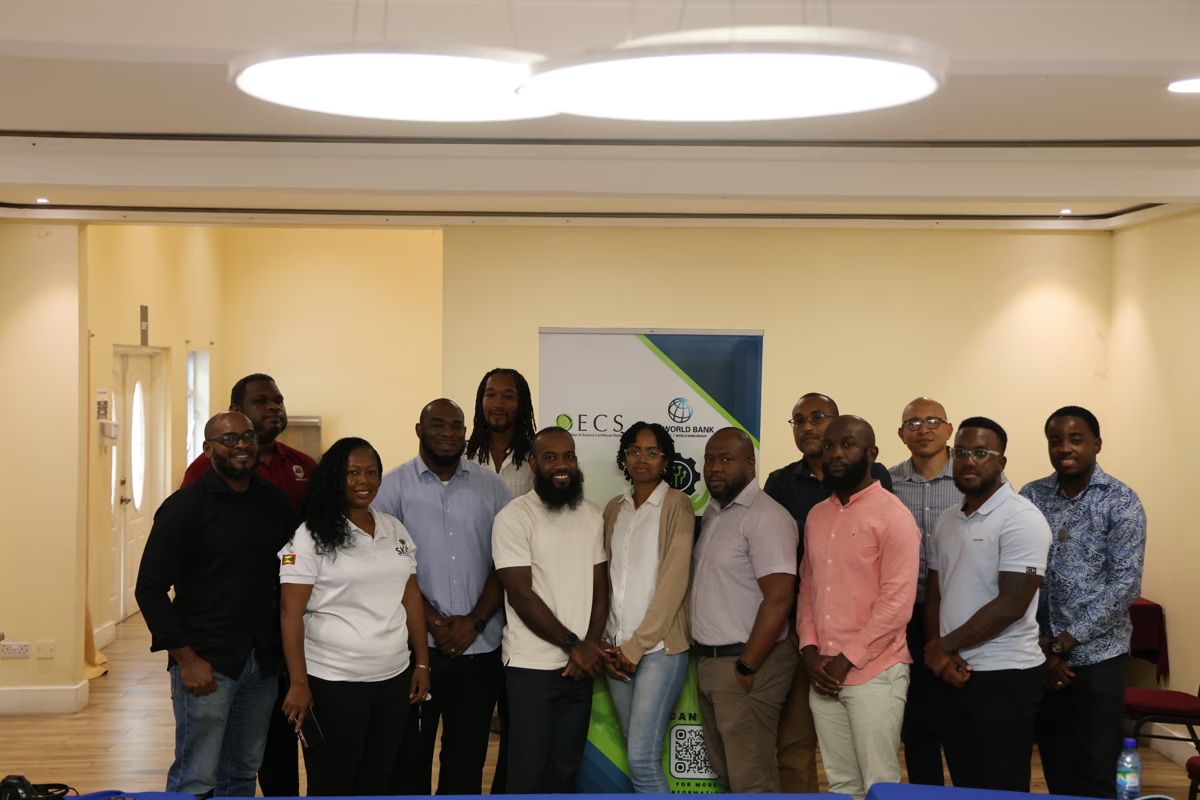 Throughout the four-day OECS SKIP SDT Ideation and Development Session, the OECS Software Development Team (SDT) worked collaboratively to transition the OECS SKIP’s three flagship platforms from architectural design into buildable, implementation-ready solutions, advancing the region towards the next phase of platform deployment and institutional pilot implementation. What made the achievement particularly remarkable was the pace at which it was delivered. By bringing together this group of software engineers and technical specialists in a single focused ideation and development session, the SDT compressed months of iterative planning, systems integration, and technical design into four days. It is an accomplishment that underscores both the caliber of regional expertise and the value of collaborative innovation in advancing the OECS’ digital transformation agenda. It also reflects the exceptional commitment of the OECS Software Development Team members, who continue to generously contribute their time and professional expertise on a voluntary basis in support of a shared vision for strengthening education and digital innovation across the OECS region.
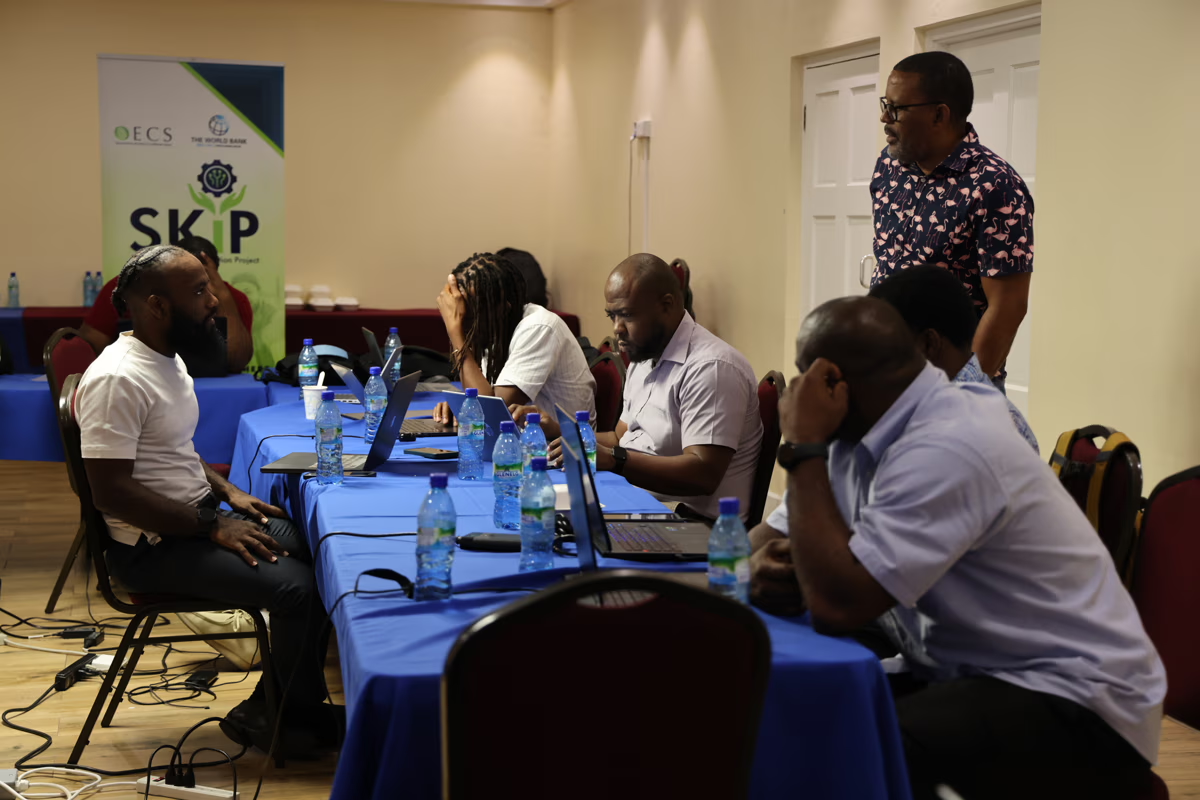 Among the OECS SKIP SDT Ideation and Development Session’s most significant achievements was the successful integration of the three platforms into a single interconnected ecosystem, allowing them to securely communicate and exchange information while maintaining appropriate governance, privacy, and interoperability standards.
This integrated approach means that, over time, learners, educational institutions, and governments in OECS Member States will benefit from data-secure digital platforms that work seamlessly together. Ranging from student records and online learning to innovation, entrepreneurship, and regional reporting, the OECS SKIP Knowledge, Technology and Innovation platform, the Virtual Campus, and the Education Management Information System (EMIS) will create a more connected, efficient and responsive post-secondary education environment across the OECS.
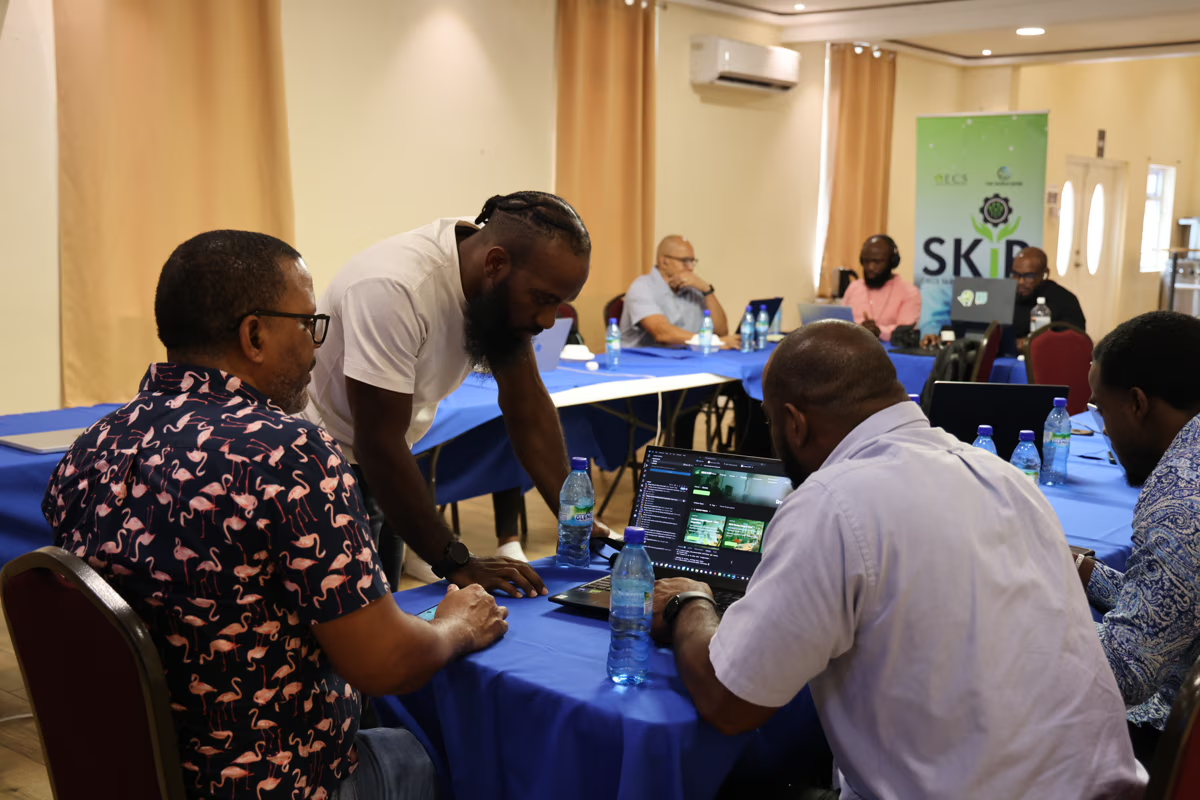 Additionally, by bringing together the OECS Software Development Team of regional software engineers and technical specialists to work simultaneously, in a collaborative model across the KTIP, Virtual Campus and EMIS platforms, the OECS SKIP SDT Ideation and Development Session enabled cross-platform dependencies to be resolved in real time, ensuring that shared infrastructure, authentication, learner identity, data governance and interoperability standards were developed cohesively rather than independently. By addressing these cross-platform dependencies during ideation and development rather than after implementation, the OECS SDT avoided the duplication of effort, redesign, and integration challenges that frequently arise when digital systems are built independently and connected later.
Reflecting on the significance of the milestone and its contribution to the OECS’ vision for a connected, digitally enabled post-secondary education ecosystem, Dr Didacus Jules, Director General of the OECS, stated:
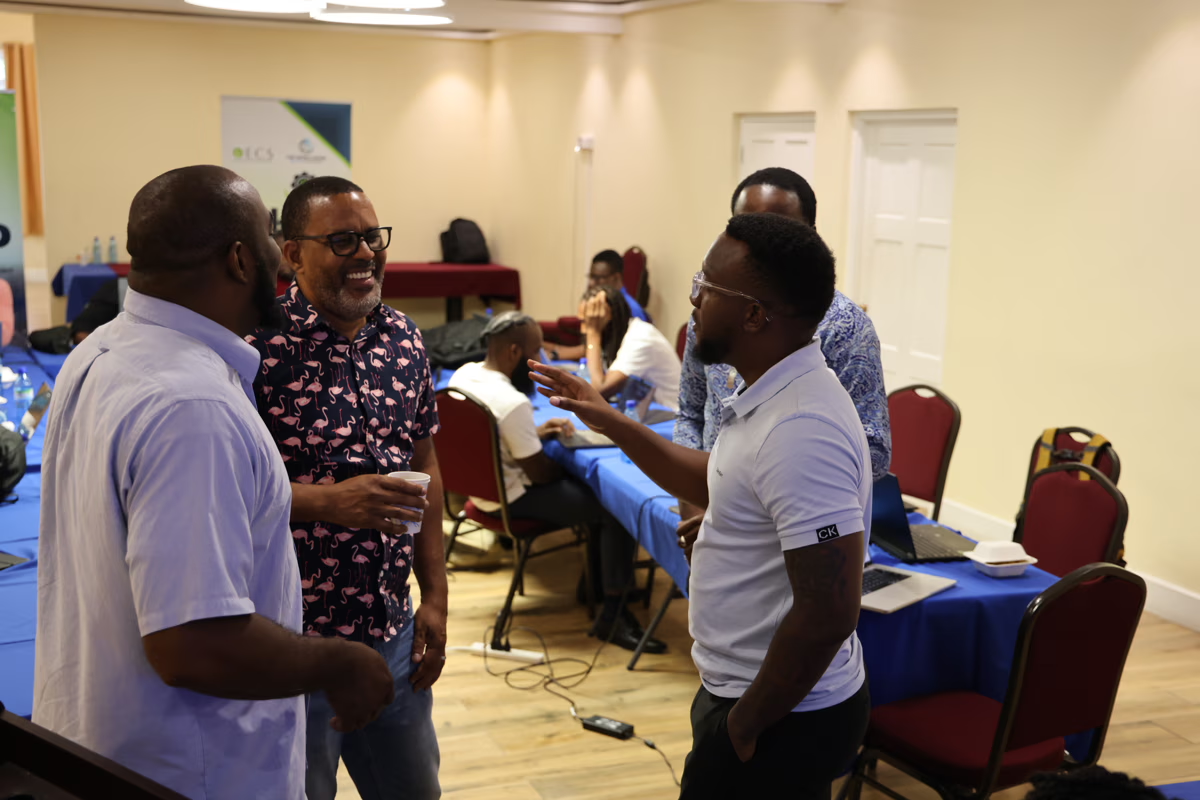 “This milestone demonstrates what is possible when the OECS invests in regional expertise to build regional solutions. Through the OECS Skills and Innovation Project, we are strengthening not only our digital infrastructure, but also the capacity of our people to shape the future of post-secondary education. Ultimately, this is about empowering the region to build its own digital future, together.”
Echoing the importance of investing in regional expertise and recognising the commitment that has driven the OECS SKIP’s progress, Mrs Sisera Simon, Head, Human and Social Division, OECS Commission, stated:
“The progress achieved during this ideation and development session reflects months of dedication, collaboration and technical excellence. It also highlights the commitment of the OECS Software Development Team, whose expertise has been instrumental in advancing the three digital platforms being developed through the OECS Skills and Innovation project.”
As the OECS Skills and Innovation Project (SKIP) continues to advance the development of its three interconnected digital platforms: OECS SKIP Knowledge, Technology and Innovation Platform, Virtual Campus and Education Management Information System (EMIS), the milestone achieved during the OECS Skills and Innovation Project Software and Development Team Ideation Session represents far more than a technical achievement within a compressed timeframe. It reflects the OECS Commission’s commitment, through the Education Development Management Unit, to harnessing regional collaboration, innovation, and homegrown expertise in and from the region to build usable, sustainable digital solutions that strengthen post-secondary education and expand innovation and opportunities across the Eastern Caribbean region. By investing in both technology and regional talent, the World Bank-funded OECS Skills and Innovation Project is laying the foundation for a more connected, resilient, and future-ready ecosystem that is designed by the region for the region.