
Source: Jamaica Gleaner
Influential leaders in the Caribbean Community (CARICOM) are confident that the current division within the 15-member bloc will not fracture the regional body, even as an active search continues for a consensus candidate to replace Dr Carla Barnett, whose position as secretary-general has become untenable.
The Sunday Gleaner was told that no consensus candidate has yet emerged, and no timeline has been set for resolving the impasse.
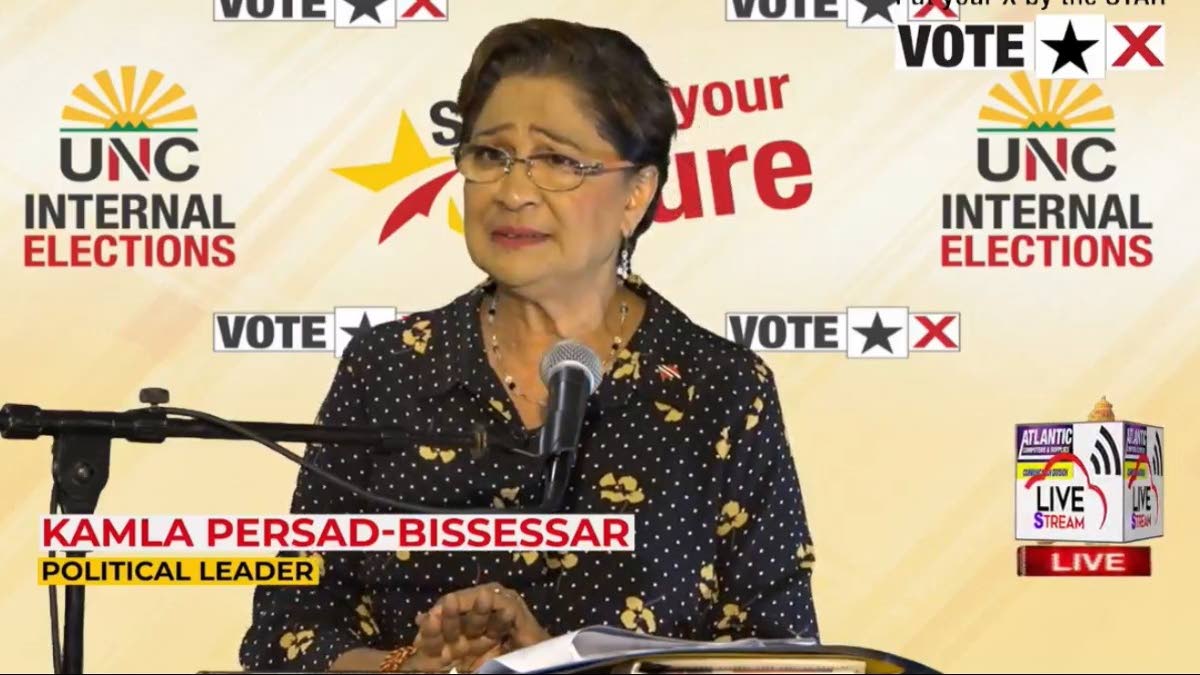 Trinidad and Tobago’s leader, Kamla Persad-Bissessar, has said the twin-island republic did not support either Barnett or the process that re-elected her. This position has fuelled the current dispute, driven by Port of Spain’s objections to the procedure used during a retreat at the February summit to reappoint Barnett, one that Trinidad and Tobago’s representative did not attend. Persad-Bissessar left the summit early and has claimed that the acting head of delegation, Foreign Affairs Minister Sean Sobers, was not invited to the retreat.
CARICOM officials have countered that Sobers declined attendance, citing concerns about seasickness during the boat crossing to the venue.
A Sunday Gleaner source said regional leaders are now drawing on decades of collective experience, wisdom, and unity in search of a solution.
“I am of the view that all former leaders may be part of the process to arrive at some consensus, and bring a solution to the matter. However, legal issues may be at play, and that’s another consideration. But one thing for certain, the body cannot operate without a secretary-general. That is the chief executive officer,” said the source, who is close to the seat of regional power.
“The person has to be able to command consensual support. It’s not a matter of procedure … . That job requires somebody who is acceptable to everybody. Otherwise, people will just shut off. But, but the secretariat cannot run without a head. It needs somebody. The secretary-general is a critical person in the constituency,” said another regional official monitoring the situation.
“The issue has moved past the voting procedure, but of whether the process was consistent with the Revised Treaty of Chaguaramas, and therefore legally sound. What is clear, Trinidad’s posture, and that of the Jamaican government, which, supported Dr Barnett, is that her (Dr Barnett) continuing in that office does not have the confidence of member states:
Jamaica’s stance has been cited as part of the division.
“Baffling,” said the source, “is why your prime minister publicly called for a revisiting of the situation, when the heads made a decision to do so. It can’t be that Jamaica was unaware of that decision,” the source suggested.
Questioning the process
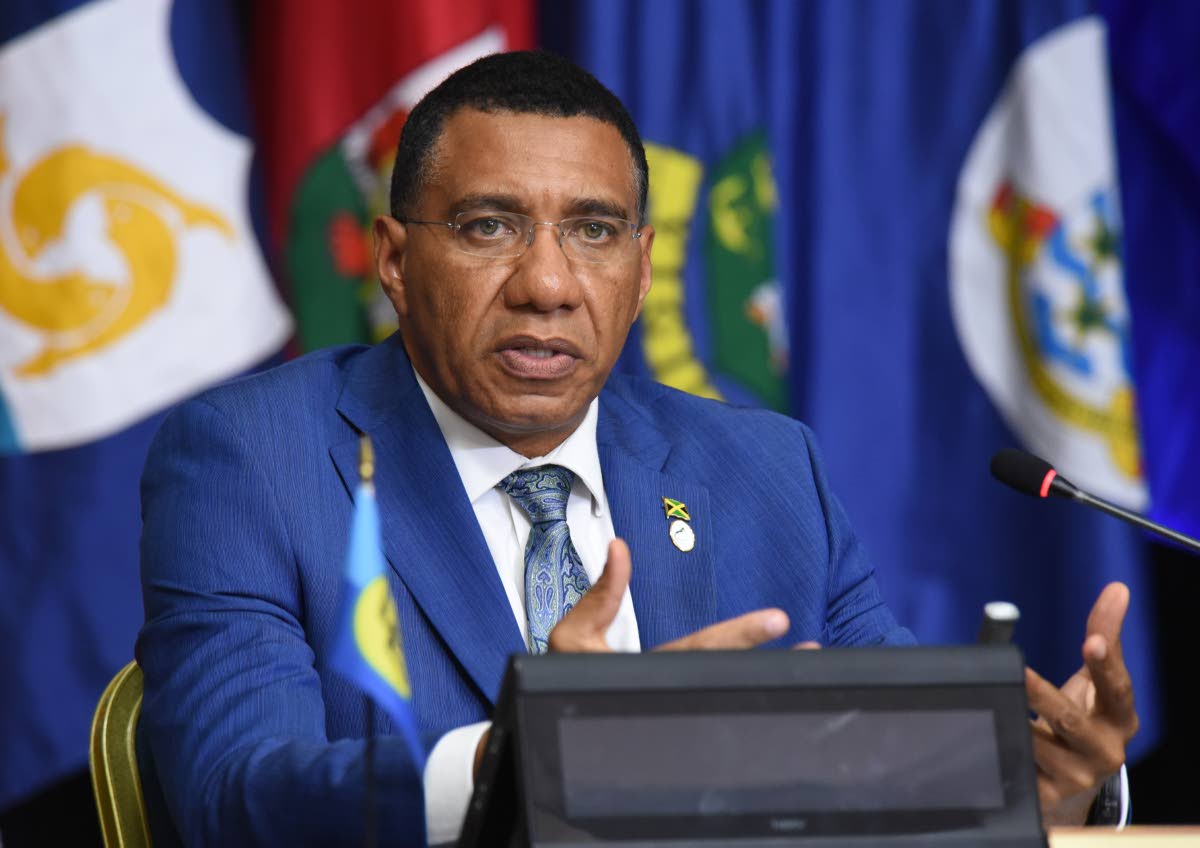 Prime Minister Dr Andrew Holness has called for a leader’s review of the reappointment of Barnett, a disclosure that suggests Jamaica may have reconsidered its vote and joined Trinidad and Tobago in questioning the process.
Speaking to Trinidad’s CNC3 television station, Holness said: “I think the solution really lies in assembling another heads meeting to have the matter addressed. That’s something I’ve been pushing for quietly behind the scenes. I think it is distressing for many people within the region what is being said in the public domain, but I know all the heads are working behind the scenes to resolve the matter.”
“What is clear is that Dr Barnett’s position is untenable,” said the source.
Former Assistant Secretary-General Joseph Cox, writing in Caribbean Financial Dispatch on April 4, said Trinidad and Tobago’s formal objection carries weight beyond procedural disagreement.
“It introduces a structural challenge: whether a secretary-general can effectively function in an environment where at least one key member state does not recognise the legitimacy of the process that produced the appointment. In practical terms, that renders the issue moot,” he argued.
He said leadership in a consensus-based regional system cannot be imposed, noting that where acceptance is absent, authority becomes contested, coordination becomes impaired, and execution becomes uneven.
Financial implications
Cox also pointed to financial implications.
“CARICOM is not an abstract construct. It is a funded entity, reliant on contributions from member states and supported by external development partners. Trinidad and Tobago accounts for approximately 22 per cent of the Community’s budget. Any signal – explicit or implied – of reduced financial commitment immediately introduces operational risk to the Secretariat. But more significantly, the issue extends to external credibility … ,” he wrote.
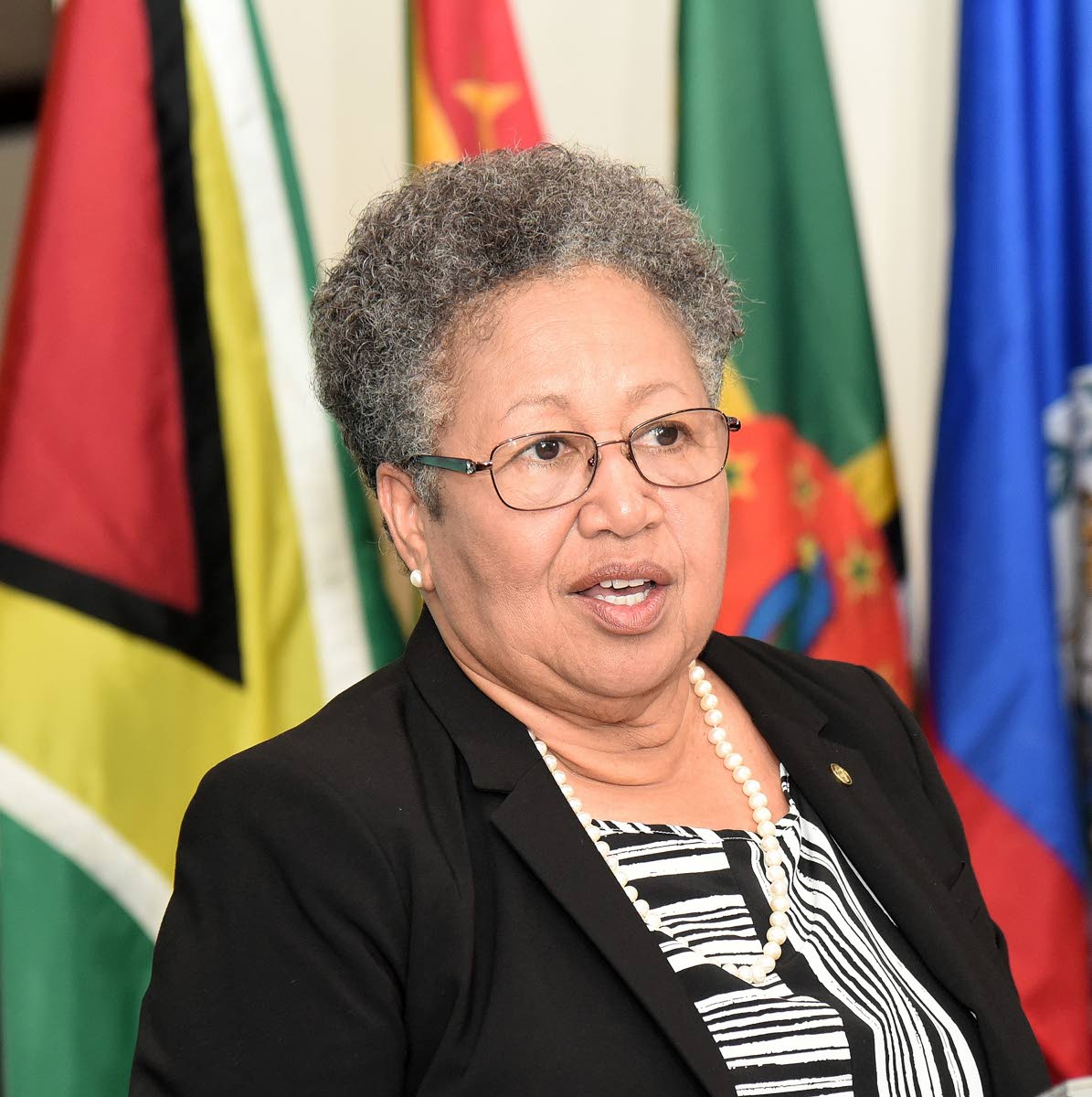 Barnett, a Belizean economist with more than 30 years of professional experience, has held several senior regional and national roles, including deputy secretary-general at the Secretariat, deputy governor of the Central Bank of Belize, financial secretary of the Government of Belize, and vice president of operations at the Caribbean Development Bank. She is regarded as a trailblazer, though not all stakeholders are convinced by her leadership.
Despite the current tensions, officials say CARICOM has faced – and survived – more severe crises. One source pointed to the 1983 Grenada invasion as a moment when the regional body nearly collapsed.
“But the body has been through worse. I am told that the invasion of Grenada nearly broke CARICOM almost entirely. [Based on what] I was told by a now-deceased former head, that situation was worse than this because they had a meeting with everybody, and then a group slinked off and had their own meeting. That group was led by Eugenia Charles (Dominica), John Compton (St Lucia), Milton Cato (St Vincent and the Grenadines), and Tom Adams of Barbados. There was also support from James Mitchell, who was a significant regional figure in St Vincent and the Grenadines … ,” the source recalled. “And, of course, your former prime minister, Edward Seaga.”
Strike against the
Cuban government
Ideology was at the centre of that divide, with then United States President Ronald Reagan seeking a coordinated strike against the Cuban government, backed by British Prime Minister Margaret Thatcher.
“My leader reminded me that the body literally nearly broke up because people attended the meeting and they were surprised when they saw Charles at the White House with Reagan, saying that they wanted the Americans to come in … ,” the official said.
The Sunday Gleaner was also told that during the Grenada invasion, the late Lester Bird, then head of delegation for Antigua and Barbuda, was forced to reverse his country’s position.
“Seaga called his father, Vere Bird, to get Lester to reverse Antigua’s position of not supporting an invasion. It was reversed and it now supported the breakaway group. Roderick Rainford was the secretary-general at the time,” the regional official said.
“When I tell you that it almost broke up CARICOM, it was no exaggeration. He said it was much more dangerous than this because of what the cutthroat group did,” the source added, noting that the crisis split the organisation.
According to the source, George Chambers of Trinidad and Tobago and Forbes Burnham of Guyana were deeply angered, and Rainford had to hold the fractured group together and guide it through the turbulence.
“So, the position has to command consensus. The body has been confronted and survived an ideological divide before, but in this case, a lot is going to depend on the attitude of the incumbent, and also Trinidad’s agreement on a consensus candidate, or it will just exercise a veto without reason,” the source said.
Leaders are said to be working around the clock to bring the matter to a resolution, though officials caution that a solution may not be immediate.