

Source: Erasmus Williams FB
Basseterre, St. Kitts and Nevis — With support from the visiting 2026 Lesser Antilles Medical Assistance Team (LAMAT) mission, audiologists from the United States Air Force are assisting the Federation in advancing plans to implement a national hearing programme.
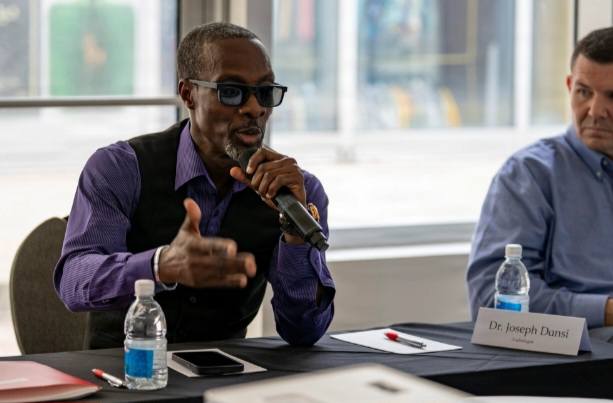
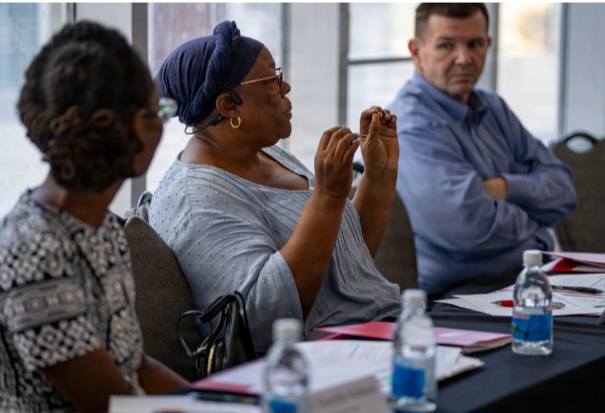
Leaders within the Ministry of Health recently convened a national workshop to formally begin development of the initiative, aligning with the Government’s broader focus on strengthening health systems and expanding access to specialised care.
“This consultation is a first step in developing a national hearing plan,” said Curtis Martin, Permanent Secretary in the Ministry of Health, as he opened the session. “Hearing loss exists within our population, and there are individuals living with unmet needs. With the right interventions, we can address those needs.”
The workshop brought together LAMAT audiologists, non-governmental organisation specialists, and representatives from health services on both islands, as well as early childhood development, education, and community outreach sectors. Participants assessed service gaps, evaluated available data, and outlined the requirements for a structured and sustainable national audiology programme.
A central focus of the discussions was the feasibility of implementing universal newborn hearing screening across the Federation — a goal leaders described as attainable given the country’s size.
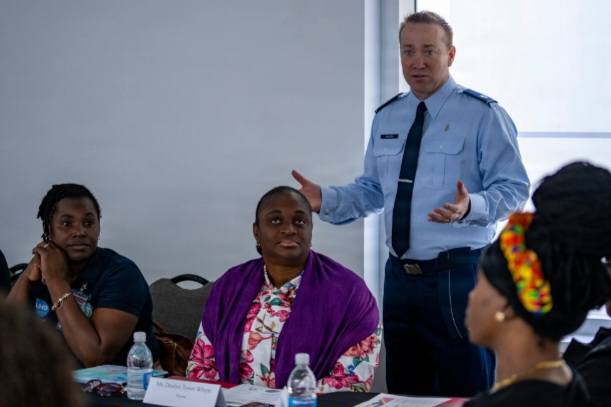
“There are about 600 births each year,” said U.S. Air Force Lt. Col. Johnny Foster. “That’s manageable. We could realistically screen every newborn and ensure that no child slips through the cracks.”
Foster, an audiologist with the 711th Human Performance Wing, is returning for his third consecutive LAMAT mission to St. Kitts and Nevis. He is also a co-founder and member of Hear for a Purpose (HFAP), an NGO focused on audiology.
Having witnessed the recurring need for hearing services across both islands, Foster, HFAP members, and fellow Air Force audiologists combined service delivery with strategic planning during the two-week mission, working alongside Ministry officials to chart a long-term solution.
“When you return year after year and see the progress, you realise this can’t be just a two-week mission once a year,” Foster said. “If we’re serious about building something that lasts, it takes commitment on both sides — and that’s exactly what we’re seeing here. We’re here to provide care during LAMAT, but just as importantly, we’re here to help build a system that continues long after we leave.”
 Over the past week, the five-member audiology team has conducted newborn hearing screenings in hospital wards, performed comprehensive diagnostic evaluations, fitted patients with new hearing aids, and carried out follow-up visits for individuals who received devices during previous missions.
The team also provided hands-on training for local healthcare professionals, including instruction in taking ear impressions to create hearing-aid moulds — a technical skill essential for sustaining services locally.
“Our goal isn’t simply to show up, fit hearing aids, and leave,” Foster explained. “It’s about early identification, appropriate treatment, and a pathway for long-term follow-up, all managed right here within the Federation.”
For many residents, the impact has been immediate. For the Government, however, the goal is long-term and systemic.
“Ultimately, this is about improving quality of life. Hearing health affects communication, education, productivity, and independence,” Martin said. “This meeting is foundational.”
 While the Federation continues to build permanent capacity, LAMAT provides critical short-term care. The partnership also benefits Air Force personnel by strengthening expeditionary medical readiness in resource-limited environments while working directly within host-nation systems.
“For our Airmen, this is readiness in action,” Foster said. “We’re delivering specialised care outside a traditional clinical setting, adapting in real time, and working side by side with partner-nation professionals. That experience sharpens our skills and prepares us for wherever we’re called next.”
Foster noted that this year’s mission stands out because of the visible government commitment and sustained engagement beyond the annual deployment.
“It’s still baby steps, but there’s real momentum,” he said. “We’re not waiting until next year to continue the conversation. The relationships are strong, and we’ll stay engaged throughout the year to keep building. With the commitment we’re seeing from the government and the people at the table, I’m excited about where this is headed.”
Across St. Kitts and Nevis, while LAMAT 2026 may last only two weeks, the national hearing programme now in development is designed to serve the Federation for years to come.